What is technology-facilitated gender-based violence (TFGBV)?
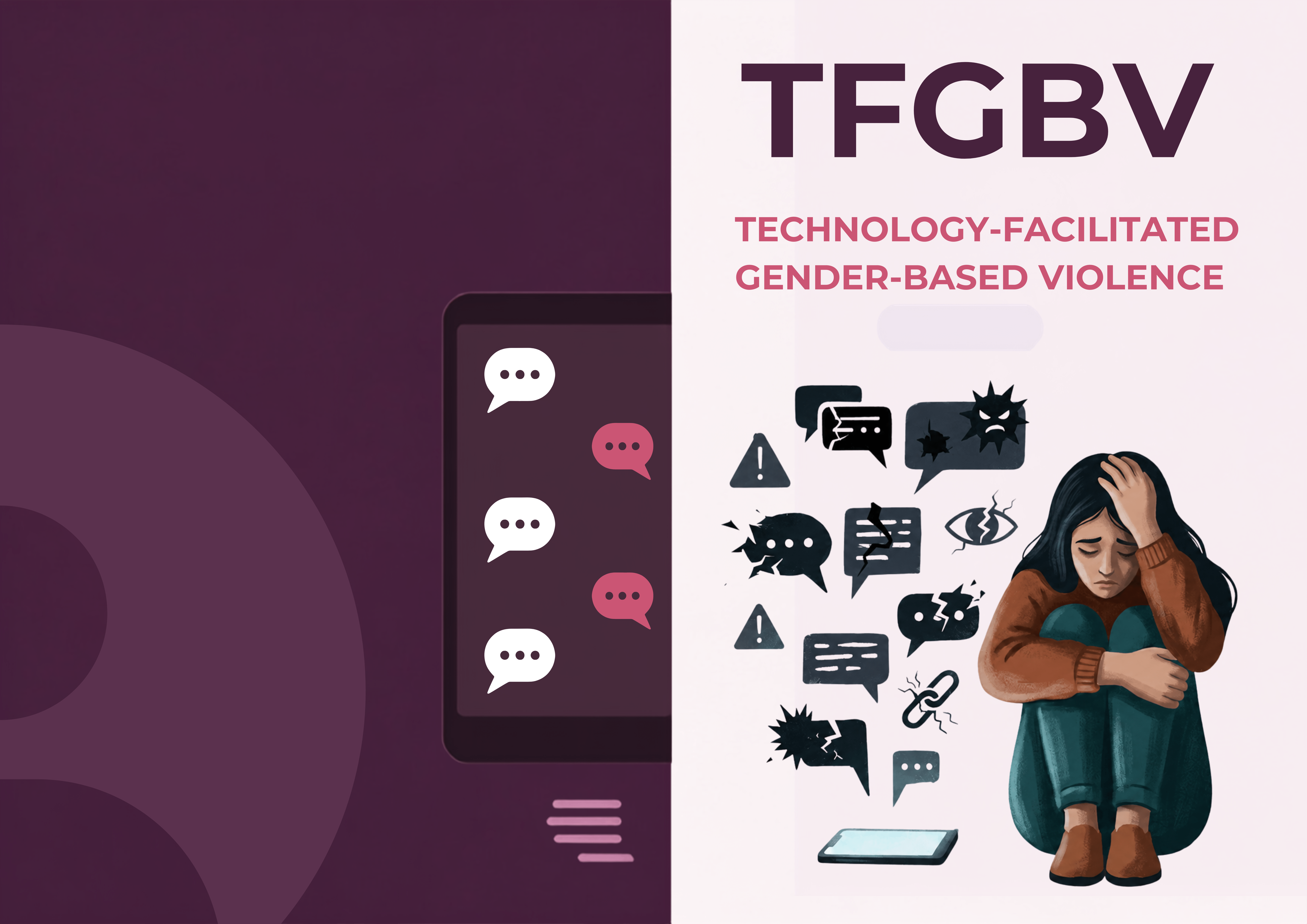
Photo: Open Development Cambodia (ODC), licensed under CC BY-SA 4.0
Technology-Facilitated Gender-Based Violence (TFGBV) is the use of digital tools or online platforms to commit violence against someone because of their gender. Digital tools or online platforms can be used to carry out, enable, or worsen the harm. TFGBV is broader than online GBV, which is confined to online spaces alone. TFGBV also captures violence enabled by technology, such as Global Positioning System (GPS)-facilitated stalking or digital financial control. It is a subset of broader GBV, distinguished by the instrumentalization of technology. TFGBV exists along a continuum with offline violence, often beginning digitally and escalating to physical harm. Online and offline violence are closely linked. Violence that begins online can escalate to physical spaces, or vice versa, creating a dangerous continuum of abuse that existing systems are still developing the capacity to address.
The key forms of TFGBV include (among others):
- Cyberstalking: Persistent, unwanted, and threatening monitoring, surveillance, contact, or pursuit of a person through technological means. Cyberstalking may occur online, offline, or both.
- Cyberbullying: Intentional and repeated use of digital technologies to harass, demean, intimidate, or harm another person, often undermining their self-esteem and well-being.
- Doxxing: The non-consensual publication or sharing of personal and sensitive information, such as addresses, phone numbers, email addresses, or family details, with the intent to expose, intimidate, or harm an individual.
- Image/Video-based abuse: The use, creation, sharing, or manipulation of images or videos, often intimate or sexual in nature, to exploit, humiliate, objectify, threaten, or harass an individual without their consent.
- Non-consensual taking and sharing of intimate images (NCII): The distribution or publication of intimate or sexually explicit images or videos without the consent of the person depicted. This term is preferred over “revenge porn.”
- Sextortion: A form of online blackmail in which perpetrators demand money, sexual acts, additional explicit images, or other favours in exchange for not releasing private or intimate content.
- Online harassment: Repeated online conduct that threatens, intimidates, humiliates, or abuses a person through offensive messages, comments, images, or other digital communications.
- Online impersonation: The creation of fake accounts, profiles, or identities to impersonate another person for purposes such as harassment, deception, reputational damage, or fraud.
Technology-facilitated gender-based violence (TFGBV) in Cambodia
In Cambodia, rapid digital transformation has resulted in widespread Internet penetration. In 2025, Cambodia’s Internet penetration represents 67.3%. As more Cambodians, particularly women and girls, move their social, professional, and civic lives online, digital spaces have become an extension of the environments where GBV occurs. Women represent 46.4% of social media users in 2025, reflecting a significant and growing female presence in online spaces, and with it, heightened exposure to technology-facilitated forms of harm.
TFGBV in Cambodia disproportionately affects women across both public and private spheres, though the nature of harm differs significantly between them. In public life, women who occupy visible roles, such as journalists, activists, politicians, human rights defenders, or civil society representatives, are particularly vulnerable to coordinated online harassment, misogynist hate speech, and reputational attacks designed to silence or discredit them.
In the private sphere, TFGBV reinforces existing patterns of domestic violence and coercive control that continue to exist in Cambodia. Intimate partners or family members may use digital technologies to monitor, control, and abuse victims, including through surveillance, financial control, and image-based abuse. Such harms often remain hidden and underreported due to stigma, family pressures, and unequal power relations. From 2021 to 2024, an estimated 34% of Cambodian women aged 15-49 experienced some forms of GBV, with technology-facilitated forms increasingly prevalent yet under-documented.
TFGBV in Cambodia does not emerge from technology alone; it reflects deeper cultural conditions. The Chbab Srey, a traditional code of conduct prescribing female obedience, modesty, and deference, reinforces a patriarchal system in which masculinity is positioned as inherently superior. These norms extend into online spaces, where women’s behavior faces heightened moral scrutiny, and their presence in public digital life is often treated as an invitation for harassment rather than a right.
This cultural environment directly shapes how TFGBV is reported and responded to. Victim-blaming remains pervasive, with survivors frequently held responsible for the abuse they experience, particularly when it involves intimate images or online interactions deemed socially inappropriate. As a result, many women and girls choose silence over disclosure, fearing shame, family pressure, or further harm, significantly undermining both reporting rates and access to support.
Key trends and statistics
Cambodia’s rapid digital expansion has coincided with a documented rise in TFGBV. Data on prevalence, while limited, points to a significant and widespread problem. “Status Update: Harassment on Social Media in Cambodia” by LICADHO in 2021 found that 37 percent of 467 women respondents reported having experienced online harassment, and 86 percent of the total 718 respondents had witnessed a woman experience online harassment. Approximately 160,000 Cambodian children aged between 12 and 17 have experienced some form of online sexual harassment, according to UNICEF’s Disrupting Harm study in 2022.
Karpeer Women initiative of Open Development Cambodia Organization (ODC) operates a virtual help desk offering free and confidential technical support to women, girls, and LGBTIQ+ individuals in Cambodia who have experienced TFGBV. Given that comprehensive national data on TFGBV remains limited, the cases documented through Karpeer Women initiative offer a valuable, if partial, window into the situation on the ground.
From 15 October to 31 May 2026, of the 308 cases collected through ODC’s TFGBV help desk Karpeer Women initiative, 296 survivors were identified as female. Among these cases, misogynistic hate speech was the most commonly reported form of abuse, followed by sexual harassment and exploitation, with multiple forms frequently co-occurring within a single case.
In terms of platforms, Facebook accounts for 80 percent of all reported cases of TFGBV in Cambodia. Instant messaging applications are a growing concern, accounting for 39 percent of reported abuse.
Perpetrators and risk factors
TFGBV in Cambodia is enabled by a combination of individual behaviors, relationship dynamics, and structural conditions. More than one in three ever-partnered men in Cambodia reported perpetrating physical and/or sexual violence against a female partner, with technology increasingly extending this intimate partner violence into digital spaces through surveillance, non-consensual image sharing, and digital control. Beyond intimate partners, perpetrators include peers, acquaintances, colleagues, and anonymous actors online.
Although comprehensive data on perpetrator types in Cambodia remains limited, documentation from Karpeer Women cases offers some insight. According to ODC’s documentation, the majority of TFGBV cases were committed by unidentified online users, highlighting how anonymity in digital spaces can enable perpetrators.
At the structural level, TFGBV is rooted in the same gender inequality, cultural norms, and patterns of harmful masculinity that drive GBV more broadly. In Cambodia, rigid gender norms and inequality are underlying drivers of violence, with failure to uphold gendered expectations of behavior often leading to harm. Digital platforms amplify these dynamics in distinct ways: anonymity emboldens perpetrators who might not act in face-to-face contexts; the scale of social media allows harassment to spread rapidly and involve multiple actors simultaneously; and weak platform accountability mechanisms, combined with limited legal recourse in Cambodia, mean that perpetrators frequently act without consequence. Together, these conditions create an environment in which online spaces replicate and reinforce the same power imbalances that sustain GBV offline.
Social norms that justify GBV frequently shift blame onto the victim, a pattern that extends online, where victim-blaming discourages reporting and reinforces impunity. In Cambodia, this is compounded by cultural expectations rooted in the Chbab Srey, where women who experience TFGBV, particularly image-based abuse or harassment arising from online interactions, are often judged for their perceived moral failure rather than supported as rights holders. Shame, fear of family judgment, and the stigma attached to public exposure lead many survivors to withdraw from digital spaces entirely rather than seek redress.
Low digital literacy among communities further limits both the recognition of TFGBV as a rights violation and the ability of individuals to identify warning signs or take basic safety precautions online. As a result, many incidents go unnamed, unreported, and unaddressed within both formal and informal support systems.
Decision-making institutions and legislative processes in Cambodia continue to operate within a broader patriarchal context. As a result, forms of violence that primarily affect women may receive less political attention and fewer resources, contributing to slower legal and policy responses to both offline and technology-facilitated gender-based violence.
Marginalized and vulnerable groups in Cambodia facing technology-facilitated gender-based violence (TFGBV)
In Cambodia, ethnic minorities are among the groups particularly affected by TFGBV, with intersecting vulnerabilities rooted in poverty, geographic isolation, and limited access to support mechanisms. A CEDAW monitoring report on minority communities in Cambodia, including Khmer Krom, ethnic Vietnamese, and Cham Muslim communities, found that for many minority girls, violence is treated as a normal part of life, with most not seeking help from authorities due to self-blame, shame, and stigma. This culture of silence applies equally to technology-facilitated forms. While research on GBV among ethnic minority and Indigenous communities in Cambodia exists, documentation of technology-facilitated forms of that violence remains a notable gap. Civil society organisations have identified Indigenous communities as a priority group for TFGBV awareness, yet existing prevention frameworks have yet to adequately reach or account for their specific vulnerabilities and contexts.
In the absence of comprehensive TFGBV-specific research, a CARE Cambodia survey on GBV provides a useful, if partial, overview of the landscape for LGBTIQ+ communities. Its findings point to entrenched patterns of violence that digital platforms are increasingly amplifying: 60% of respondents identified harassment as a major problem, and 32% reported physical violence from non-LGBTIQ+ individuals. Online, these harms take on additional dimensions; non-consensual sharing of intimate images and outing via social media carry severe social consequences for a community already navigating systemic discrimination, underscoring the urgent need for research that addresses TFGBV against LGBTIQ+ people in Cambodia directly.
Among transgender women, 85% of those who experienced harassment did not report it to authorities, citing an absence of meaningful institutional support, a barrier that applies with equal force to technology-facilitated abuse. Cambodia does not currently have dedicated legal provisions addressing TFGBV against LGBTQIA+ individuals, and existing GBV frameworks do not explicitly include sexual orientation or gender identity as protected grounds.
Impacts on survivors/victims
Drawing on the United Nations Population Fund (UNFPA) Framework for TFGBV Programming, the impacts of TFGBV on survivors span four interconnected dimensions.
- Psychological impacts are among the most documented. TFGBV frequently spills into severe mental health impacts, including anxiety, depression, and post-traumatic stress. The persistent nature of digital abuse, where harmful content such as non-consensual images or harassment threads can remain publicly accessible indefinitely, means psychological harm for TFGBV survivors can be prolonged and recurring in ways distinct from offline violence.
- Physical impacts arise through the online-offline continuum. TFGBV can escalate from digital spaces into physical harm, creating a continuum of abuse that can culminate in the most extreme forms of violence. In Cambodia, digital threats and doxxing have been documented as precursors to in-person confrontation and assault.
- Social impacts are particularly significant in Cambodia’s communal culture, where reputation and family honor carry considerable social weight. Image-based abuse and public online shaming carry immediate reputational consequences for survivors, while stigma and victim-blaming norms mean that TFGBV survivors, rather than perpetrators, frequently face community judgment. Public stigma and shame remain among the primary reasons survivors do not seek help in Cambodia.
- Economic impacts follow directly. Survivors often withdraw from digital platforms integral to their livelihoods, disengage from professional networks, or leave employment following TFGBV incidents. Sextortion and blackmail, documented forms of TFGBV in Cambodia, impose direct financial harm, while broader cycles of violence reinforce economic dependence and restrict women’s participation in the workforce.
International, regional and Cambodian legal and institutional framework
Current legal frameworks, both internationally and across ASEAN, are still developing to address these forms of harm. At the international level, CEDAW General Recommendation No. 35 extended the definition of GBV to explicitly include technology-facilitated forms, while reports from the UN Special Rapporteur on Violence Against Women have increasingly called on states to address online and digital harms as human rights violations. Together, these instruments provide a normative foundation, though they remain non-binding and unevenly applied.
At the regional level, legislative responses are emerging but inconsistent. The Philippines’ Safe Spaces Act (2019) stands out as one of the more comprehensive examples, criminalising gender-based online harassment and recognising digital spaces as sites where rights violations occur. However, many ASEAN countries lack equivalent legislation, and where laws do exist, enforcement gaps, limited digital literacy among justice actors, and the cross-border nature of TFGBV continue to undermine their effectiveness.
At the national level, Cambodia has established a range of legal instruments relevant to GBV. The Constitution guarantees equal rights and freedom from discrimination, while the Criminal Code prohibits rape, sexual harassment, and indecent assault. The 2005 Law on Prevention of Domestic Violence and Protection of Victims addresses domestic violence through prevention, intervention, and duty-bearer accountability, and the 2008 Law on Suppression of Human Trafficking and Sexual Exploitation targets trafficking and sexual exploitation. A Joint Prakas issued in 2017 by the Ministry of Women’s Affairs (MoWA) and the Ministry of Information established ethical guidelines for media reporting on GBV, protecting survivor dignity and safety.
However, these frameworks fall significantly short of addressing TFGBV. No legislation specifically defines or criminalises online harassment, and the draft Cybercrime Law, in development since 2016, addresses only child pornography, leaving broader online violence against women and marginalised groups without legal remedy. Cambodia is still developing foundational laws on data protection, privacy, and electronic transactions, all of which are necessary to respond meaningfully to a rapidly growing digital sector.
Additionally, Cambodia does not currently have dedicated legal provisions addressing TFGBV against LGBTQIA+ individuals, and existing GBV frameworks do not explicitly include sexual orientation or gender identity as protected grounds. As a result, psychological, emotional, and digital forms of abuse are frequently overlooked, weakening timely identification and intervention.
Momentum for change is nonetheless growing. In December 2025, the MoWA and the UN, with support from Australia through the ACCESS 2 programme, convened a national dialogue bringing together government, technology companies, civil society, and young people to collectively address TFGBV. At the policy level, the MoWA is implementing the Neary Rattanak VI strategic plan (2024-2028), under which the fourth National Action Plan to Prevent Violence Against Women (NAPVAW IV, 2024-2030) includes a dedicated commitment to developing a legal framework specifically targeting GBV and sexual exploitation.
Reporting and support mechanisms in Cambodia
Cambodia has developed a range of reporting and support mechanisms for GBV survivors, spanning government institutions, civil society, UN agencies, and the private sector. While these mechanisms address GBV broadly, dedicated TFGBV-specific pathways have begun to emerge in recent years. Nevertheless, significant gaps remain, particularly in the availability of specialised services, the accessibility of existing mechanisms to the general public, and the capacity of institutions to respond to the distinct and evolving nature of technology-facilitated harm.
- Government and Institutional Mechanisms: MoWA operates a national GBV helpline and leads coordination through the Technical Working Group on GBV, which brings together government, UN agencies, and civil society to guide policy and service delivery. At the sub-national level, District Working Groups on GBV provide coordination across provinces. In December 2024, MoWA and the Ministry of Health launched guidelines for One-Stop Service Units, providing medical care, legal support, psychological assistance, and safety services under one roof, with Standard Operating Procedures disseminated to all 25 provincial governors. The National Police Cybercrime Unit maintains a 24/7 online reporting portal for cybercrime, including TFGBV, accessible via Telegram, email, and hotline. However, the absence of TFGBV-specific legislation and limited institutional capacity to handle such cases with the requisite sensitivity continue to constrain the effectiveness of these mechanisms.
- Digital Tools: UNFPA Cambodia, in partnership with MoWA, has developed two digital platforms for GBV survivors: a chatbot accessible through a widely used social media platform and a smartphone application offering information on GBV, support services, hotline numbers, and a service provider map and directory. These tools represent a growing recognition of the need for digitally accessible reporting and referral pathways. Nonetheless, their reach remains limited by disparities in digital literacy and smartphone access, particularly among women and girls in rural and remote areas.
- Civil Society Mechanisms: CSOs provide the most varied and TFGBV-specific support. Organisations offer walk-in crisis centres, provincial hotlines, legal aid, psychosocial counselling, and emergency shelter for women and girls. The Child Helpline (1280) provides free, 24-hour support for children and young people up to 25 years old. More recently, TFGBV-specific initiatives have emerged, including survivor documentation programmes, digital safety training for civil society, and dedicated online reporting platforms. Open Development Cambodia’s Karpeer Women initiative maintains a TFGBV data dashboard, survivor documentation services, and a helpline accessible via Telegram and Signal. Stop Online Harm operates a survivor-centred help desk with an online reporting form specifically for TFGBV cases. Despite the breadth of services offered, most CSO mechanisms serve only specific population groups, such as human rights defenders or CSO workers, limiting their accessibility to the general public.
- Research and Awareness: Research organisations and International NGOs have contributed to building the evidence base and public awareness on TFGBV in Cambodia, including through baseline studies on TFGBV targeting women journalists and human rights defenders. These studies examined the nature, frequency, and impact of online harassment and non-consensual sharing of intimate images on these groups. Other initiatives have included community outreach and digital literacy programming, and workplace-focused programs for garment workers and migrant women. While these contributions are valuable, the overall evidence base remains narrow in scope, with research largely focused on specific professional groups and urban contexts, leaving significant gaps in understanding the broader prevalence and impact of TFGBV across diverse communities in Cambodia.
Despite these efforts, many incidents of TFGBV remain unreported due to stigma, limited awareness, and inadequate reporting pathways, with digital literacy, legal reform, and stronger reporting mechanisms identified as priority areas for strengthening. Existing hotline services have identified areas for development, including building staff capacity to handle GBV cases and strengthening IT systems to better meet the needs of survivors. Mechanisms also remain largely concentrated in Phnom Penh and a small number of provinces, with sub-national coverage continuing to develop.
More broadly, the field continues to be constrained by a lack of both quantitative and qualitative research on TFGBV in Cambodia. The absence of large-scale prevalence data makes it difficult to fully understand the scope of the problem, while the limited body of qualitative research means that the nuanced experiences of survivors, including the psychological, social, and economic dimensions of harm, remain insufficiently documented and understood.
Relevant stakeholders working on technology-facilitated gender-based violence (TFGBV) in Cambodia
No. | Stakeholder | Organization/ Institution Type | Target Beneficiaries | Report and Support Channels | Relevant Projects |
Legal support | |||||
1 | The Cambodian League for the Promotion and Defense of Human Rights (LICADHO) | CSO | Women, girls, LGBTQ+ individuals, human rights defenders | Walk-in Hotline (023 727 102) Provincial offices | |
2 | Cambodian Women’s Crisis Center (CWCC) | CSO | Women and girls experiencing GBV, including TFGBV | Drop-in crisis centre Hotline:
| |
3 | The Cambodian Human Rights and Development Association (ADHOC) | CSO | Women, activists, journalists, marginalized groups | Walk-in Provincial offices | |
4 | Chab Dai Coalition | CSO | Trafficking survivors, women and girls at risk of exploitation | Community outreach Referral network | |
5 | Cambodian Center for Human Rights (CCHR) | CSO | Human rights defenders, LGBTIQ+ individuals, activists, and communities facing rights violations, including online harassment | Legal aid Human rights defender fund Online reporting via Sithi Human Rights Portal Walk-in and digital | Sexual Orientation and Gender Identity (SOGI) Project Protecting Fundamental Freedoms Project |
Psychosocial and Counselling Support | |||||
6 | Child Helpline Cambodia – Hotline 1280 | CSO | Children and youth aged 0-25 | Free call or SMS to 1280 Online (childhelplinecambodia.org) | |
7 | Cambodian Women’s Crisis Center (CWCC) | CSO | Women and girls in crisis | Drop-in crisis centre (cwcc.org.kh) | |
8 | Ministry of Women’s Affairs (MoWA) Helpline | Government | Women and girls experiencing any form of GBV, including TFGBV | National helpline:
| |
9 | Chab Dai Coalition | CSO | GBV and trafficking survivors, at-risk women and girls | Community outreach Referral pathways | |
Technical Support | |||||
10 | Open Development Cambodia Organization (ODC) | CSO | Women, girls, and LGBTQ+ individuals experiencing TFGBV | Case documentation and technical support through the initiative Karpeer Women
| Karpeer Women TFGBV data dashboard Survivor documentation; digital safety training for Cambodian civil society (1), (2) and awareness campaigns Technical Support for TFGBV Case Monitoring and Service Delivery 2026 |
11 | Karpeer | INGO | Civil society members, journalists, and vulnerable communities facing digital threats in Cambodia. | Telegram: @KarpeerHelpLine Signal: KarpeerHelpline.01 Email: help@karpeer.me | |
12 | Stop Online Harm | CSO | Women and girls experiencing TFGBV in Cambodia | Survivor-centred direct support and referral Online form for reporting: https://www.stoponlineharm.org/
| |
13 | Cambodian Center for Independent Media (CCIM) | CSO | Journalists, citizen journalists, media workers, and civil society actors facing digital threats; indirect relevance to women experiencing TFGBV in media and public roles | Digital rights advocacy Media safety training | Digital Rights Working Group (DRWG) membership Cambodia Digital Rights Forum (co-organized with EngageMedia) |
14 | Smart Axiata | Private Company | Mobile internet users broadly, with relevance to TFGBV survivors | Telecommunications-level reporting and network safety mechanisms | Participation in Our Safety national dialogue (December 2025) |
Multisectoral / Integrated Response | |||||
15 | One-Stop Service Units (OSSUs) | Government, UN | GBV survivors across all forms, including TFGBV | Provincial health facilities and women’s affairs offices | |
16 | UNFPA Cambodia | UN | Women and girls, marginalized groups, GBV survivors | GBV Safe App Provincial service networks | |
17 | UNICEF Cambodia | UN | Children and adolescents aged 0-18, particularly those experiencing online harm | Government and NGO referral pathways CNCC coordination | Online Child Sexual Exploitation (OCSEA) National Action Plan |
Digital Reporting and Safety Tools | |||||
18 | GBV Safe App សុវត្ថិភាពយើង | Government (MoWA), UNFPA | Women and girls experiencing GBV or TFGBV across Cambodia | Mobile application (click to Google Play) | |
19 | National Police Cybercrime Unit | Government | All victims of cybercrime, including TFGBV survivors |
| National cybercrime enfoncement INTERPOL coordination |
20 | INHOPE / ICMEC Hotlines | International, Government | Children and minors affected by online sexual exploitation | International hotline network coordinated with national police | |
Coordination and Policy | |||||
21 | Technical Working Group on Gender-Based Violence (TWG-GBV) | Government, Multi-Stakeholder | Indirect: shapes services and policy for all GBV survivors | National and sub-national coordination meetings | NAPVAW IV coordination; sub-national DWG-GBV capacity building Cambodia – Gender Based Violence Institutional Mapping Report (English) |
22 | District Working Groups on GBV (DWG-GBVs) | Government | GBV survivors at community and district level | District-level women’s affairs and social affairs offices | |
23 | Ministry of Post and Telecommunications (MPTC) | Government | Children and Internet users broadly | Regulatory and policy engagement with digital platforms | |
24 | UN Women Cambodia | UN | Policymakers, practitioners, survivors, and the broader public | TFGBV Resource Repository National dialogue | |
Research and Awareness | |||||
25 | Asia Centre | INGO | Practitioners, policymakers, survivors, and civil society | Published research and reports | |
26 | Klahaan Organization | CSO | Women, survivors, general public, community educators | Community outreach Educational resources | Behind the screen: understanding online gender-based violence in Cambodia |
27 | CARE International Cambodia | INGO | Garment workers, migrant women, women in informal employment | Workplace and community outreach programs | |

