Bringing open data closer to students: ODC celebrates Open Data Day 2026 at Chean Muk Secondary School
As digital information becomes increasingly important in everyday life, helping young people understand data is becoming an essential part of preparing them for the future. To mark Open Data Day 2026, on 12 March 2026, through the Prayuters Library Program in Preah Vihear province, Open Development Cambodia (ODC) brought this conversation directly into the classroom through an interactive workshop designed to help students explore how data exists in their own surroundings and why it matters to their communities.
More than 70 students and teachers at Chean Muk Secondary School joined an interactive workshop organized by Open Development Cambodia (ODC) to celebrate Open Data Day 2026 under the topic “Bring Open Data Closer to the Local Communities.” Designed as part of this year’s celebration, the event introduced students to the idea of open data through practical learning activities that connected directly to their school and community environment.
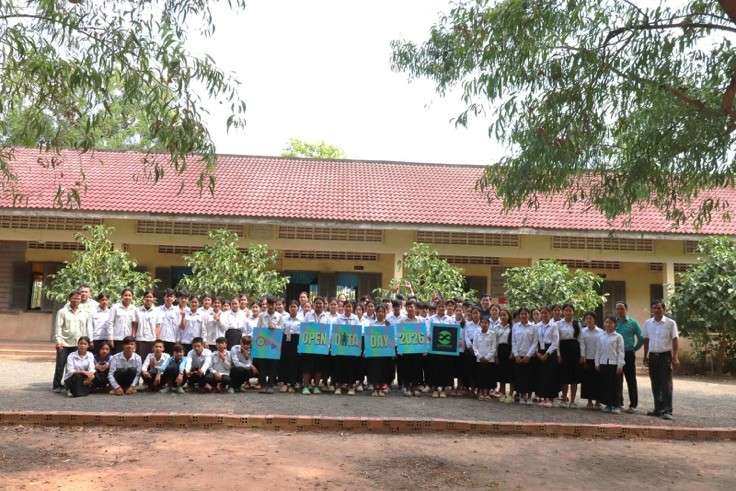
At the start of the workshop, the ODC team introduced the event’s objectives and key agenda, encouraging students to actively engage throughout the day. Rather than relying only on presentations, the workshop was designed as a participatory learning experience where students were invited to think, discuss, observe, and present. Through quizzes, brainstorming, open discussion, reflection, and group work, students were encouraged to build their understanding of open data step by step.
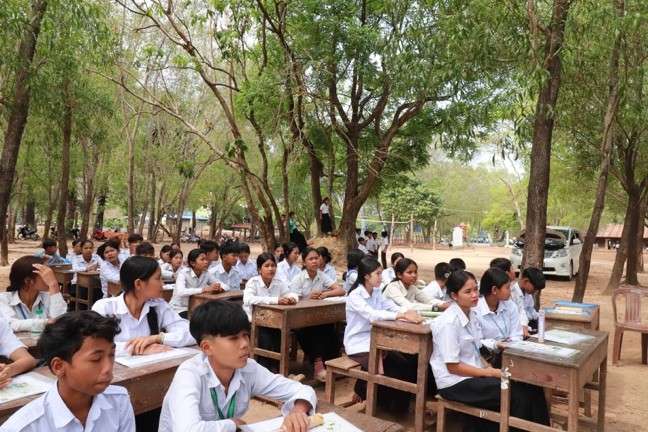
To begin, the team introduced one simple but important question: What is data? Students were invited to share the words and ideas that came to mind when they heard the term. Their answers quickly filled a flip chart with examples such as numbers, percentages, places, measurements, occupations, and information about people, animals, and materials. Using the students’ own examples, the team explained that data can be understood as any kind of information or fact that can be collected and used to learn something.
The discussion then moved from definitions to everyday examples that students could easily relate to. Students were asked to identify data already present in their own surroundings, leading to examples such as trees, school buildings, teachers, hospitals, and commune hall. These examples helped students see that data is not limited to computers or statistics, but exists all around them in daily life. To make the concept even more tangible, a can of Coca-Cola was used as an example to show how product labels also contain data, such as sugar content and ingredients, which people can use to make informed choices.
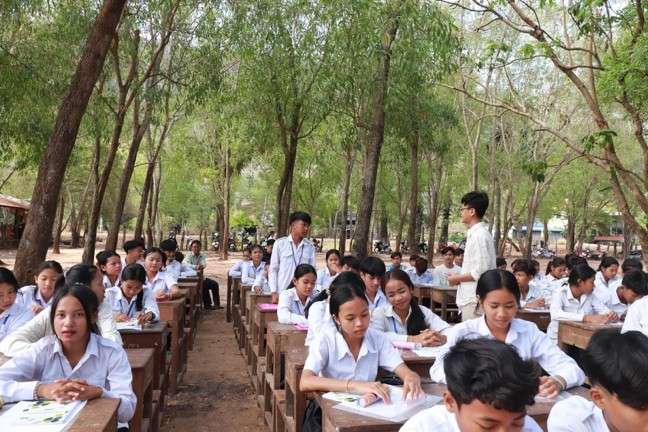
After building this basic understanding, the ODC team briefly introduced the concept of open data and explained why accessible information matters for communities. The conversation focused on how knowing where services are located, how resources are distributed, or what exists in a community can help people make better decisions and access what they need more easily.
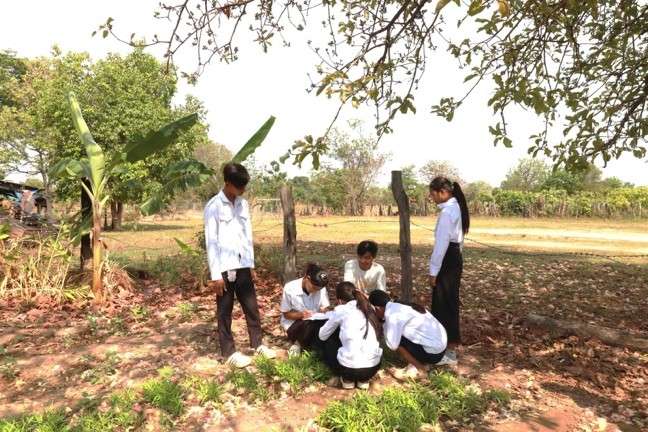
The workshop then shifted into a hands-on activity that brought the concept to life. Students were divided into eight groups and assigned different types of data to collect around the school. Each group worked on a specific topic, including trees, school buildings, the library, vegetable fields, toilets, motorbikes, and waste around the campus. Before going out to collect information, facilitators encouraged students not only to count what they saw, but also to observe details. For example, groups working on trees were asked to identify different types, note their condition, and describe the benefits they provide.
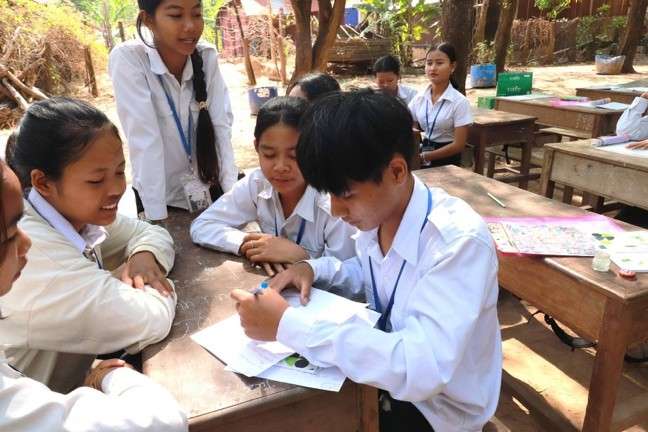
The activity quickly turned the school grounds into an active learning space, with groups discussing how to record their findings and deciding what details were important. As students returned, each group presented its findings using different formats. Some organized their information into tables, while others used descriptive notes, bullet points, and percentages. Several groups went further by breaking down their data into categories, showing an emerging understanding of how information can be structured and interpreted.
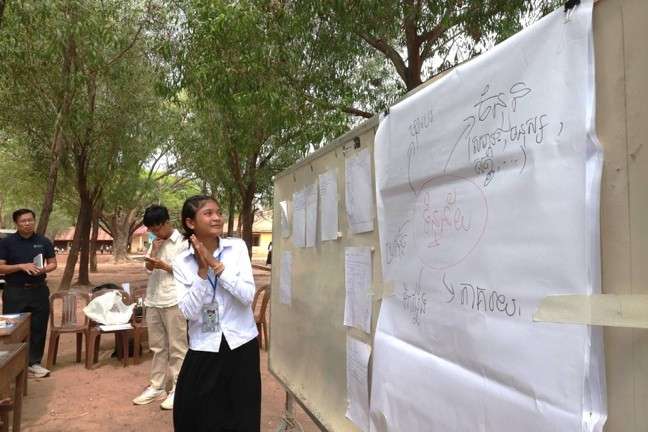
The presentations also revealed students’ creativity in turning simple observations into meaningful information. During the reflection session that followed, facilitators highlighted how students had already applied basic data collection methods without needing complex tools. The discussion allowed students to think about how even simple local observations can become useful data when collected carefully.
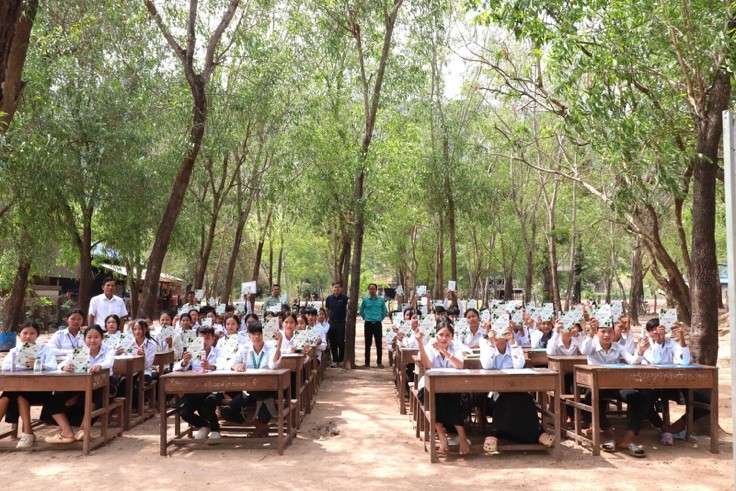
Before the event ended, students were invited to reflect on the importance of online safety for children, particularly on how young people can protect personal information, recognize potential risks on digital platforms, and practice responsible behavior when using the Internet.
The event concluded with reflections on why data matters in today’s digital world. Students were encouraged to see data not only as classroom knowledge, but as a useful skill for understanding communities, solving problems, and preparing for future opportunities in an increasingly digital society.
The event was supported by Heinrich Böll Stiftung (HBS) Cambodia, Norwegian People’s Aid (NPA) Cambodia, and the APNIC Foundation.

