Strengthening CSO members’ capacity through data literacy training
A successful three-day Data Literacy Training for Civil Society Organizations (CSOs) was held in Phnom Penh from November 11 to 13, 2025. Organized as part of the Strengthening CSOs to Take Action on Economic Governance (SCAEG) project, co-funded by the European Union, the workshop brought together 15 participants, including seven women, from partner organizations working to strengthen community livelihoods in Cambodia’s coastal regions.
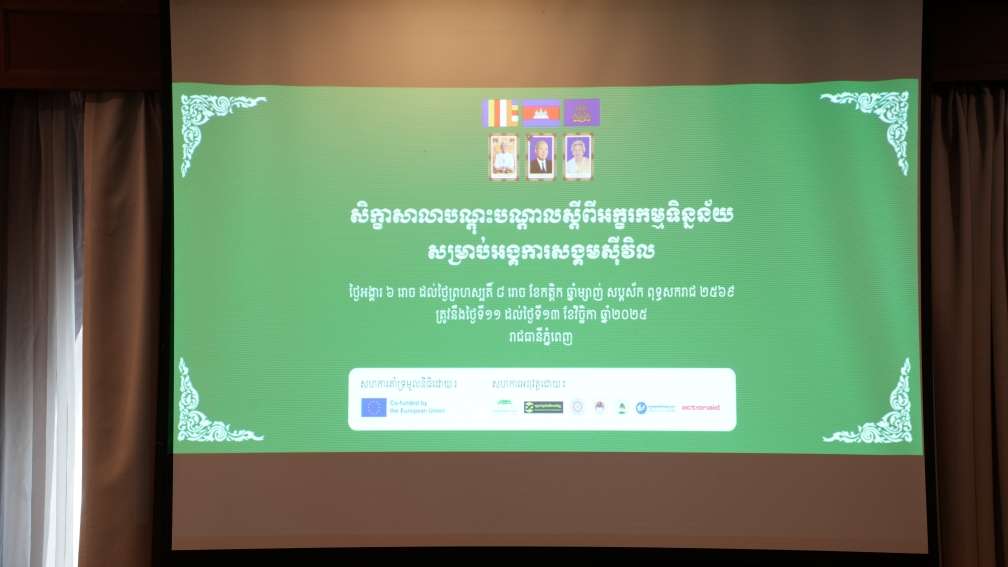
Data literacy has become an essential skill for effective project management and accountability. Yet many CSOs still face challenges in processing and using data to inform planning, stakeholder engagement, and decision-making. This workshop aimed to address that gap by equipping participants with the core skills needed to work confidently with data in their daily work.
The training focused on a comprehensive curriculum designed to enhance participants’ ability to understand and apply data in project contexts. Topics covered during the workshop included:
- Understanding data: foundational concepts and relevance for CSO work
- Data cleansing: preparing and cleaning datasets for reliable analysis
- Basic statistics: key statistical concepts to support data interpretation
- Data analysis: techniques for identifying insights and trends
- Data visualization: presenting data clearly for stakeholders
- Data preparation: organizing data outputs for effective use
The sessions were structured to combine theoretical knowledge with interactive exercises, allowing participants to immediately apply new skills to real data examples. This participatory approach encouraged active engagement and peer learning throughout the workshop.
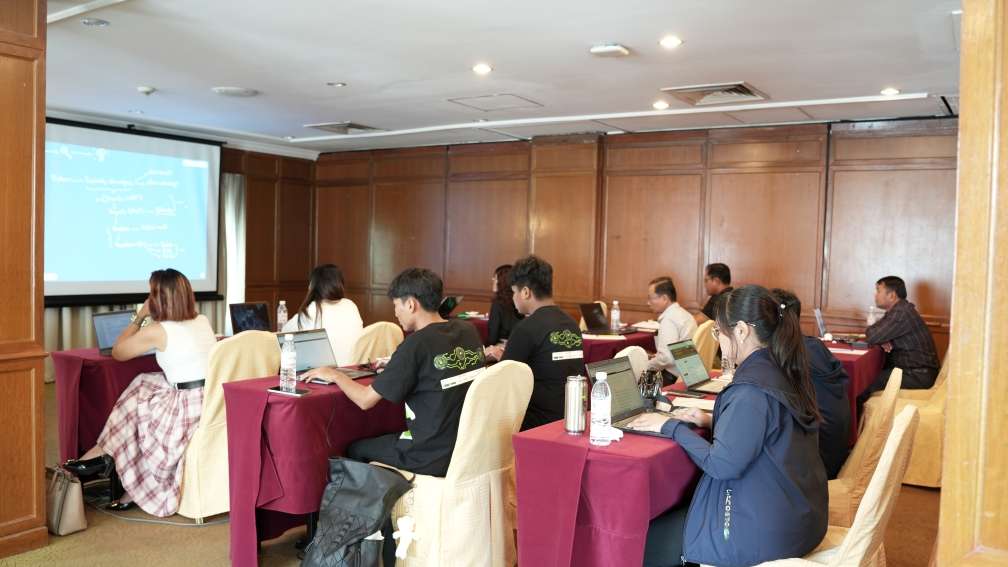
The participants came from diverse partner organizations working in coastal communities, where development challenges demand data-informed decision-making. With seven women in attendance, the training highlighted the importance of inclusive capacity building in strengthening civic engagement and governance at the community level.
Throughout the workshop, participants worked through hands-on data tasks, from cleaning messy datasets to creating visual charts and graphs. These exercises reinforced their understanding of how data can be transformed into meaningful insights that support strategic planning, reporting, and communication with stakeholders.
By the end of the training, participants had significantly improved their data literacy competencies. In terms of learning needs, participants expressed interest in further developing their data management and data analysis skills. They would like additional training on tools such as GIS and Kobo to analyze better, interpret, and apply data in real-world contexts. Some recommend covering fewer topics per session to ensure deeper understanding and practical application. Additionally, participants suggested organizing refresher training sessions every three to six months to reinforce and sustain learning outcomes.
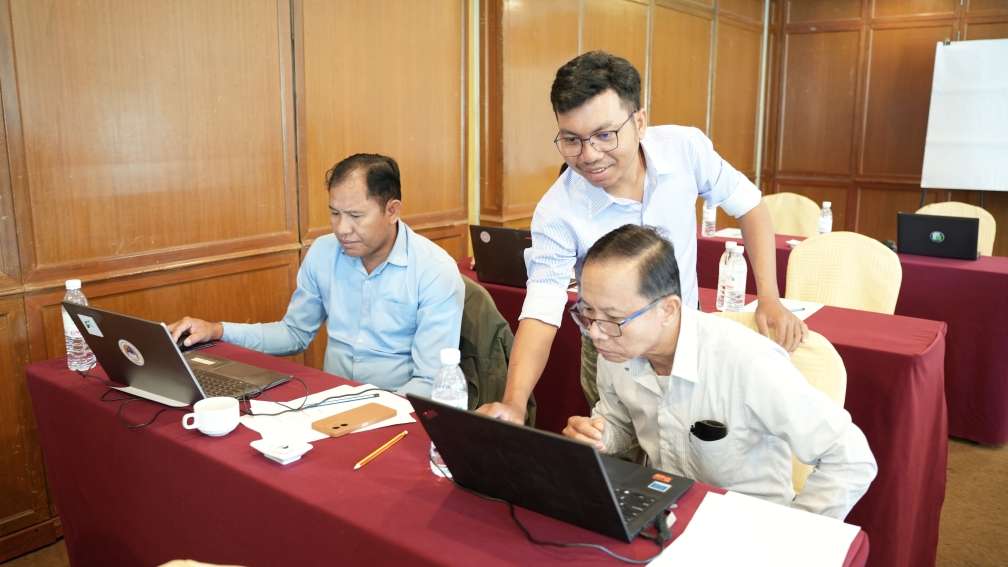
The workshop also fostered a shared appreciation for data as a strategic asset in CSO work, one that can strengthen transparency, support advocacy, and improve development outcomes in coastal communities.
The successful completion of this data literacy workshop marks an important milestone under the SCAEG project. As CSOs continue to integrate data-driven approaches into their work, this training lays the foundation for stronger evidence-based programming and greater impact across coastal development initiatives.
With enhanced data skills, partner organizations are better positioned to design and implement interventions that are responsive to community needs and supported by solid evidence, ultimately contributing to more effective governance and improved livelihoods.

