Learning about data through drawing: Open Data Day 2026 at Pahal Primary School
Helping children understand data does not always begin with numbers or definitions; it can also begin with imagination, colour, and familiar objects from daily life. As part of Open Data Day 2026, on 12 March 2026, through the Prayuters Library Program based in Preah Vihear province, Open Development Cambodia (ODC) introduced young learners at Pahal Primary School in Preah Vihear Province to the concept of data through creative activities designed to match their age and learning style.
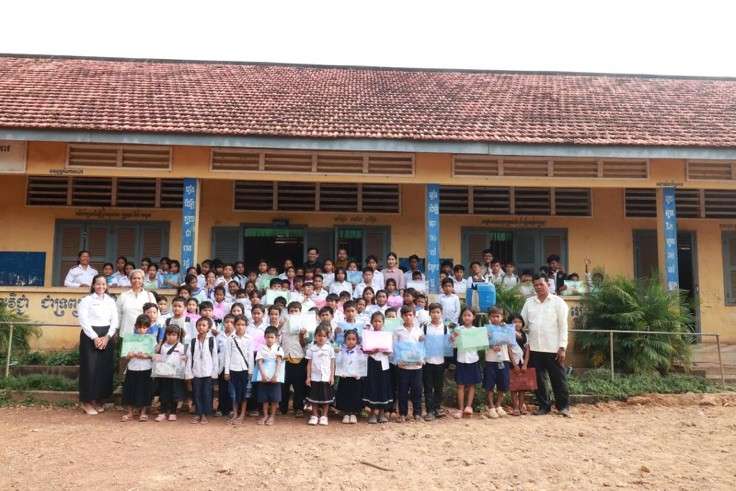
More than 100 students and teachers took part in the interactive learning event organized by ODC as part of Open Data Day 2026 under the topic “Bring Open Data Closer to the Local Communities.” The event introduced the idea of data through drawing, observation, and simple discussion, allowing primary school students to explore how information already exists in the world around them.
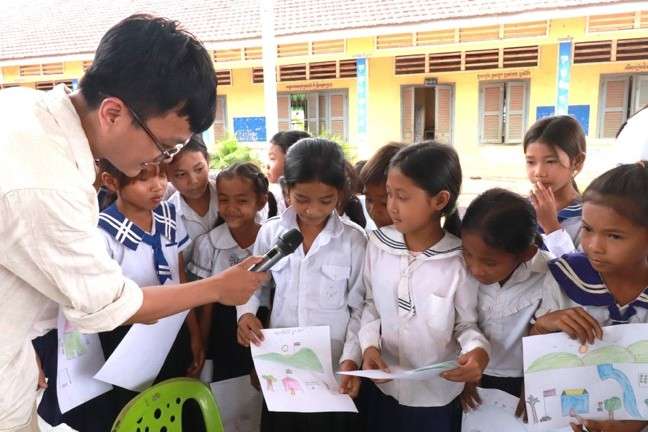
Rather than beginning with definitions of open data, students were encouraged to learn about data through creativity. Each student received an A4 sheet of paper and a box of coloured pencils, and facilitators invited them to draw their favorite images, such as stars, homes, trees, flowers, mountains, schools, clouds, or family members. Students were encouraged to choose objects that reflected something familiar from their school or communities so that the drawings could later be used to identify and count different forms of data.
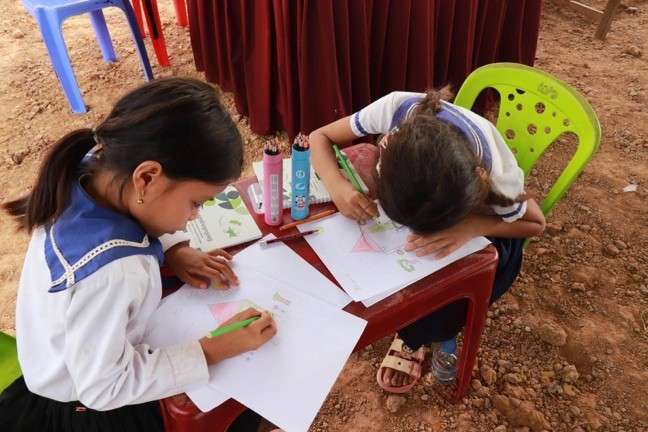
The purpose of the drawing activity was not only artistic expression, but also to help students recognize that data comes from everyday objects and surroundings. Through simple examples such as counting the number of trees, flowers, or houses in a drawing, students began to understand that data is information that can be observed, counted, and used to describe what exists around them.
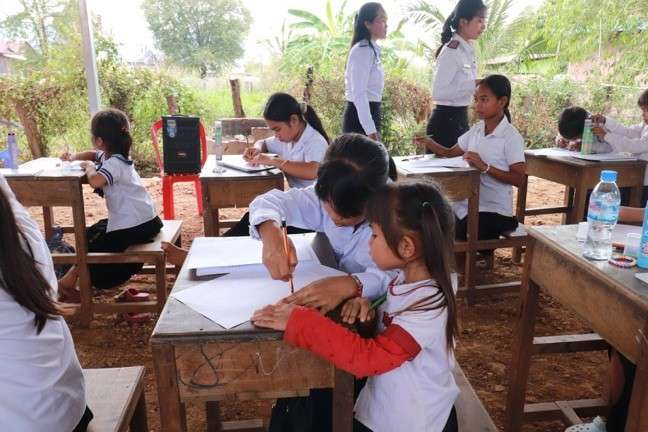
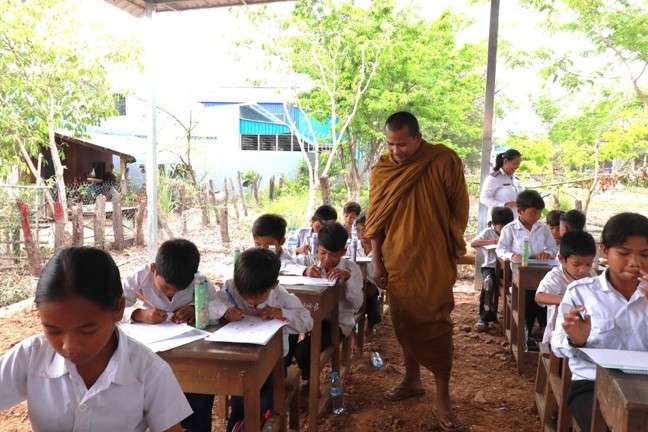
For nearly 50 minutes, the classroom became a creative working space filled with concentration and colour. Students carefully painted their drawings using the twelve-color pencil sets, while ODC team and teachers moved around the room to offer support when needed. The activity also revealed strong artistic talent among several students, with many producing colorful and detailed illustrations that reflected both imagination and observation.
Once the drawings were completed, facilitators invited 10 to 15 students to volunteer and present their work in front of their classmates. During each short presentation, students were asked simple questions such as: What can you count in your drawing? How many are there? Why did you choose to draw this? These questions encouraged students to connect their drawings to counting, comparison, and explanation, turning artwork into an early exercise in identifying and interpreting data. Students who volunteered to present received educational materials in recognition of their participation.
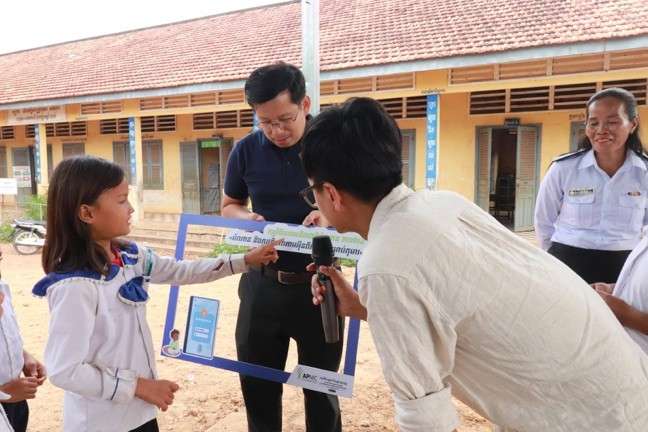
Although the event focused primarily on introducing data in a simple and accessible way, it also included a short interactive session on online safety for children. The ODC team briefly discussed how online platforms can support learning and communication; while also reminding students that Internet use can involve risks if not approached carefully. To make the topic engaging for younger learners, a small reading challenge was organized with volunteered students. They were invited to read aloud key words connected to National Reading Day and the theme “Reading and Online Safety for Children.” The activity introduced simple vocabulary related to online safety and helped reinforce awareness of potential online risks in a way suitable for primary school students.
By combining drawing, counting, presentation, and discussion, the event showed that even young children can begin understanding data when learning starts from familiar objects and creative expression. Through simple activities adapted to their age, students were able to explore how data connects to daily lives while building confidence to share their ideas in front of others.
The event was supported by Heinrich Böll Stiftung (HBS) Cambodia, Norwegian People’s Aid (NPA) Cambodia and the APNIC Foundation.

