From digital opportunities to online safety: Empowering young people in Kampong Thom province
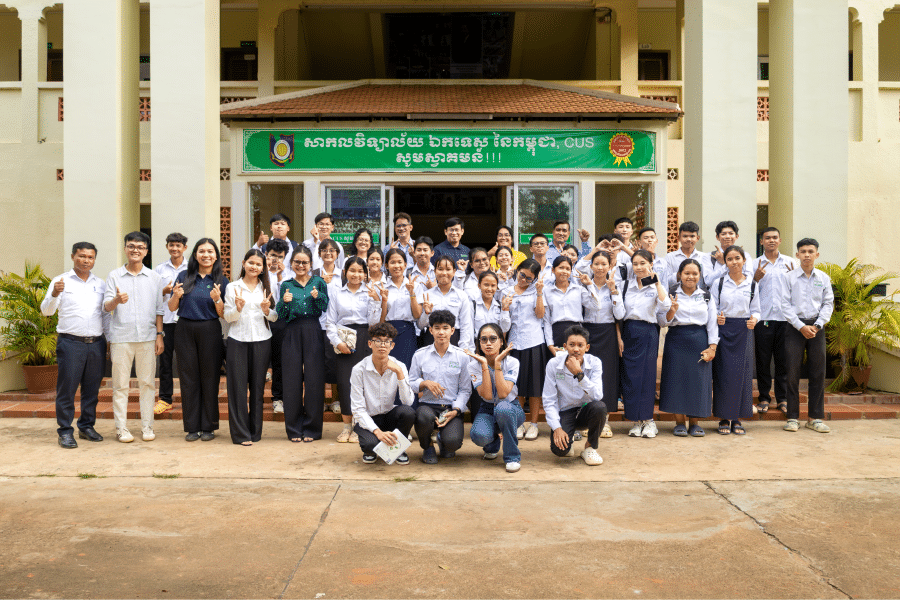
On 23 August 2026, Open Development Cambodia (ODC) organized a full-day “Workshop on Knowledge Sharing: Promoting Online Safety for Children” in collaboration with the Ministry of Post and Telecommunications (MPTC) and the Cooperation Committee for Cambodia (CCC). Held at the Cambodian University for Specialties (CUS) in Kampong Thom province, the workshop brought together 135 students (93 women and 42 men) aged 15-18 from the university and various high schools.
Opportunities and risks of digital media for children in Cambodia
The workshop began with a panel discussion that provided an interactive space for panelists and students to explore the opportunities and risks on digital media. The panel featured Mr. Chan Pheakdey, a member of the Online Safety Working Group at the Ministry of Post and Telecommunications, Ms. Sours Thida, Communications Officer at ODC, and Ms. Chorn Thavy, SDGs Ambassador for the Volunteer Youth Ambassador Program. Moderated by Mr. Vong Promnea, the discussion first talked about digital media and its growing role in shaping how students communicate and access information.
It then moved to various opportunities that digital media can provide. Drawing from her experiences, Ms. Thavy highlighted benefits such as learning new languages, accessing learning materials, connecting with their peer, and engaging in their communities. They were also informed about potential risks at the same time. These risks reflect the findings of the Disruptive Harm Report 2022 that was presented by Mr. Pheakdey. The report found that one in ten children had experienced online harassment and exploitation. Among survey participants, 9% were asked to share sexual photos and videos, 6% were asked to buy sexual videos and photos, and 2% were forced to engage in sexual activity.
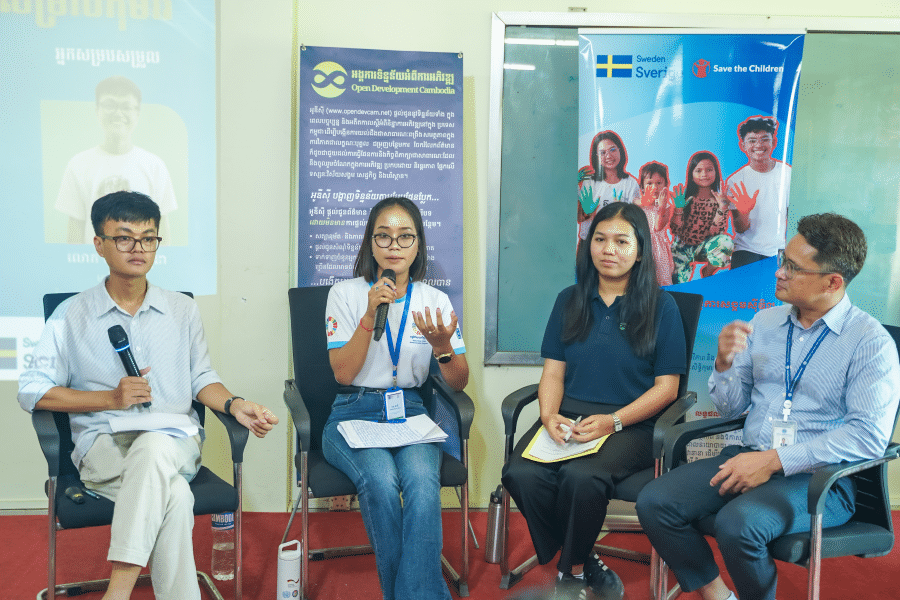
The panel also discussed how online harms can affect children differently, particularly those who may be more vulnerable to online content and abusive behavior online. The discussion also explored ways to empower children to use digital media safely and effectively. Ms. Thida highlighted the importance of digital literacy, emphasizing the need to build students’ capacity to protect personal information, identify online harms, seek appropriate support, and use the platforms responsibly.
The panelists also agreed that ensuring children’s online safety is not the responsibility of children alone. Parents, teachers, government, civil society organizations, and tech companies all have important roles to play. Among these actors, panelists put stronger demands on companies, as they have the choice to develop safer platforms for children.
Why do digital footprints matter in online harassment?
In addition to raising awareness of the opportunities and risks, the workshop also walked participants through basic privacy practices that online users may often overlook. The facilitator shared that only 29% of Cambodian youth consider sending personal information to someone they have never met in person to be “very risky”. This finding clearly highlights gaps in young people’s understanding of online privacy.
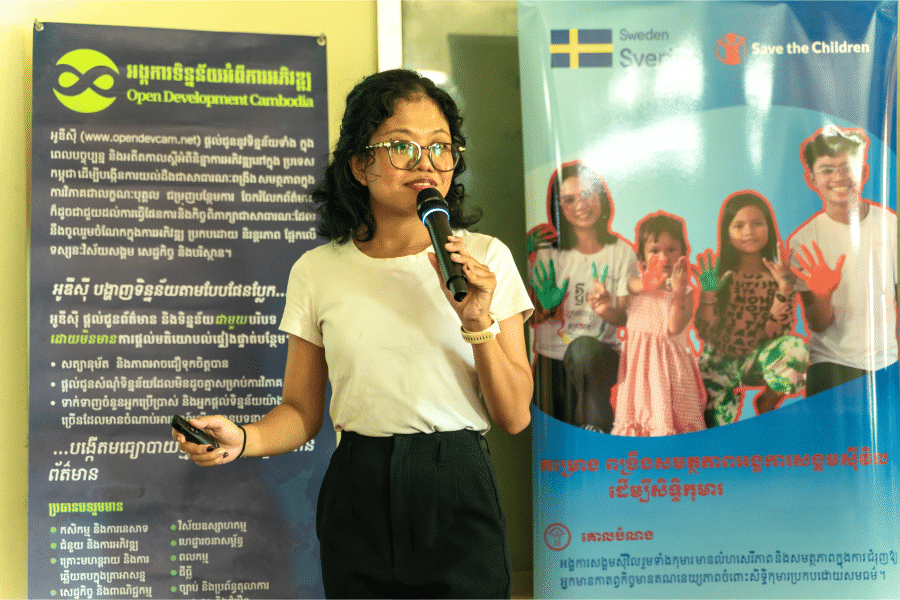
The facilitator introduced the concept of a digital footprint, explaining how the personal data that we share can contribute to our online footprint and potentially expose us to online harassment and exploitation. During this session, she provided examples of personal data that students may not previously have considered sensitive or risky to disclose, including their full name, school, phone number, home address, and ID card. Such information can often be found in what we and others post, the places we go, and what we communicate on messaging apps.
Before moving to the practical exercise, students learned several approaches for reducing digital footprint, including thinking about the implications of disclosing personal information, deactivating or deleting unused accounts, and strengthening account privacy settings. The exercise to identify and assess risks associated with the disclosure of personal data further strengthened students’ understanding of the consequences of oversharing.
Understanding common forms of online harassment against children
A dedicated session was designed to help students understand different forms of online harassment. This was particularly relevant as young people may experience them while using social media platforms.
The common forms faced by young people include cyberbullying, non-consensual sharing of images, online sexual harassment, cyberstalking, and online grooming. After explaining each form of harassment, the facilitator teamed up students to put what they learned into practice. Each team was given a scenario involving online harassment and asked to assess whether the situation could be considered a form of online harassment and explain their reasoning.
One important point raised during the session was the distinction between a “joke” and “harassment.” Young people may sometimes perceive harmful behavior as a joke, which can contribute to the normalizing of harassment. The facilitator emphasized that harmful behaviors should not be dismissed as a joke, and discussed how gender and social norms can contribute to the persistence of online harassment in Cambodia.
Ending online harassment from individual users?
Following the discussion on online harassment, the facilitator moved to the next session where students got to know the ethical behaviors that online users can adopt to build a safer online environment. As some users may engage in online harassment without fully realizing it, the session encouraged students to become more aware of their own actions, for example, when commenting on other people’s posts or sharing content that could harm others.
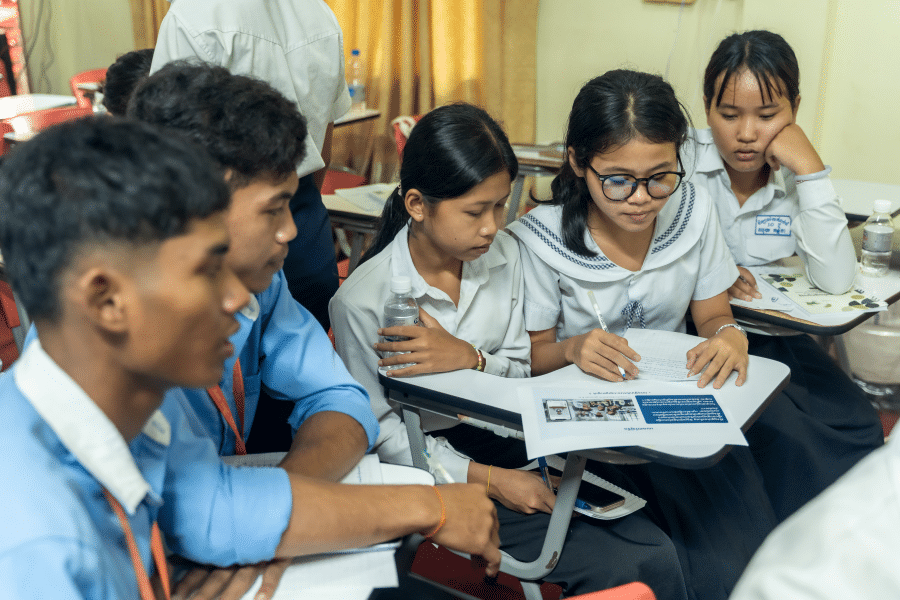
Through interactive presentations and practical exercises, the facilitator provided the students with several principles of responsible online behavior. These included respecting other users by avoiding insults and hate speech, protecting other people’s privacy, sharing accurate information, and being accountable for your actions. These principles can contribute to creating more respectful and safer online spaces for children in Cambodia.
The session also highlighted the importance of reporting harmful or abusive content to the platforms and seeking support from trusted people, such as parents, teachers, and friends. Before concluding the workshop, the facilitator guided students through the process of reporting violative content on commonly used platforms, particularly Facebook and TikTok. The facilitator also shared several helplines that students can contact for support.

