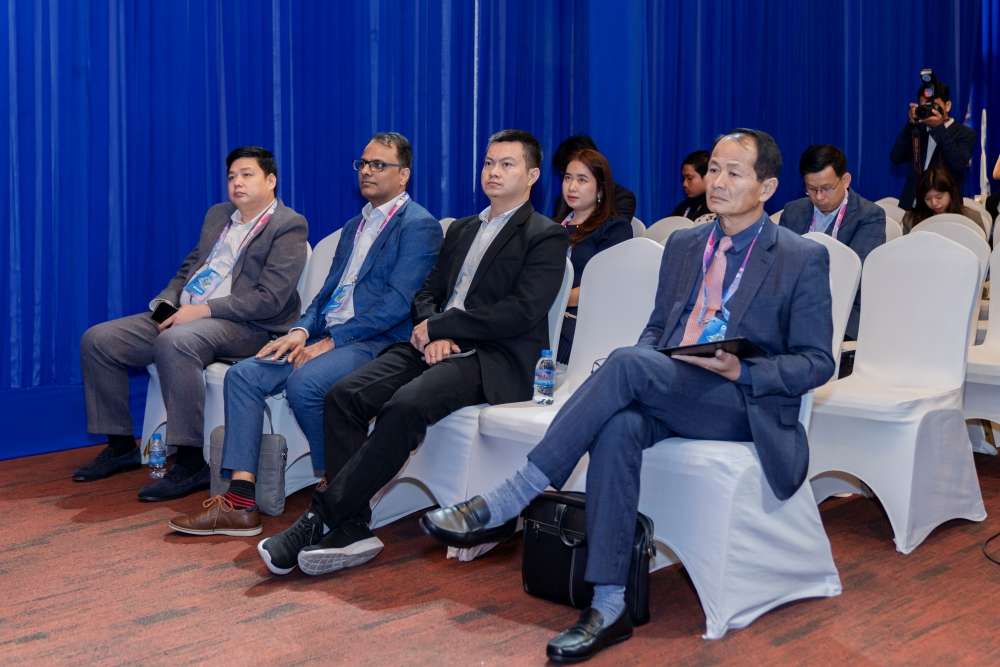
Cambodia’s path to universal connectivity: insights from experts
With Cambodia’s Digital Government Policy 2022-2035 and Digital Economy and Society Policy Framework 2021-2035, Cambodia is actively advancing toward a fully digital society. Achieving universal connectivity is therefore crucial to providing widespread, affordable access to mobile services and supporting the country’s broader development objectives.
During the keynote, Mr. Penh Sokharath, Director of the Radio Frequency Regulation Bureau at Telecommunication Regulator of Cambodia (TRC), highlighted the country’s ongoing connectivity efforts. The fiber optic backbone network is being strengthened to cover more regions, while network optimization initiatives, such as removing unused cables, are improving efficiency. Site planning involves conducting drive tests to identify connectivity gaps, plotting new sites, coordinating sharing priorities with Mobile Network Operators (MNOs), assigning sites to TowerCos, and executing the projects. Cambodia has also made progress in 5G implementation, with 475 towers deployed to support next-generation mobile services.
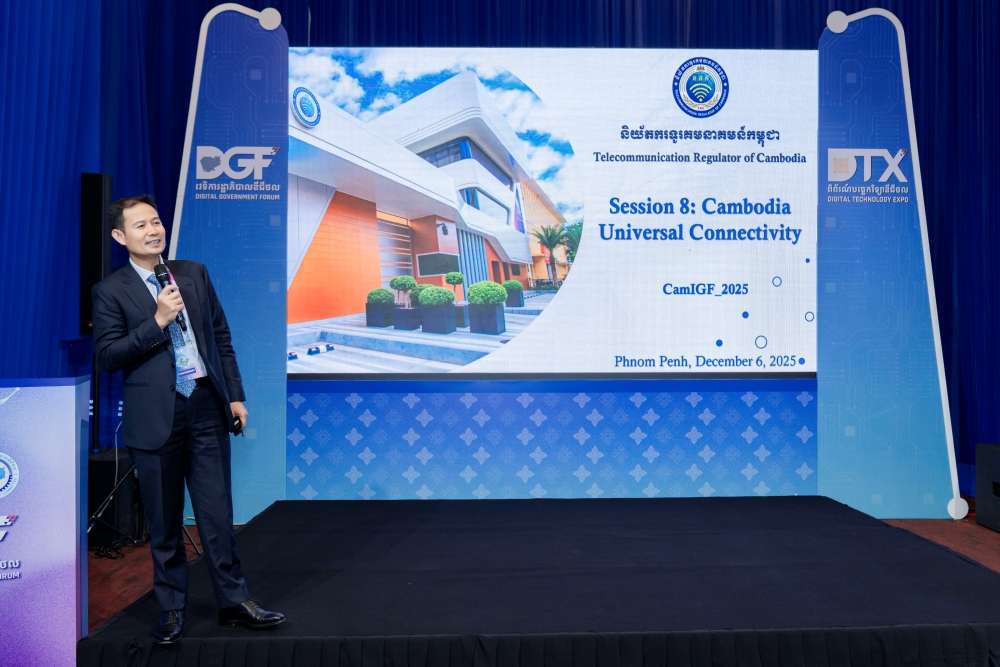
Affordability remains a priority for Cambodia’s telecom sector. Mobile spending as a percentage of monthly income shows that Cambodia is performing very well, with the average spending at 1.76%, categorizing it as “very affordable.” This demonstrates that mobile services are accessible to most citizens, supporting digital inclusion across urban and rural areas.
Tower sharing and site selection policies further enhance efficiency and reduce costs. Multiple operators can use the same physical tower, preventing the need for duplicate sites and improving aesthetics. Operators submit requests for new towers, which regulators review to ensure proximity and preference for locations that serve multiple parties. New towers are only permitted if no nearby sharing tower exists or if existing towers have reached capacity. Decisions are made based on network needs, geography, population density, and distance thresholds. Shared towers are cheaper, often pre-approved, and designed to accommodate multiple operators, whereas new towers require extra approval, higher costs, and serve a single operator.
The panel discussion, moderated by H.E. Mr. Chun Vat, Secretary of State of the Ministry of Post and Telecommunication (MPTC), brought together Mr. Penh Sokharath, Mr. Ouk Chippal, B2B Group Manager, Viettel Cambodia, Mr. Sok Ty, National Coordinator, APNIC Foundation, and Mr. Sanjay Pangaonkar, Director of Planning Solution and Support, Telcotech, to explore strategies for achieving inclusive digital access nationwide.
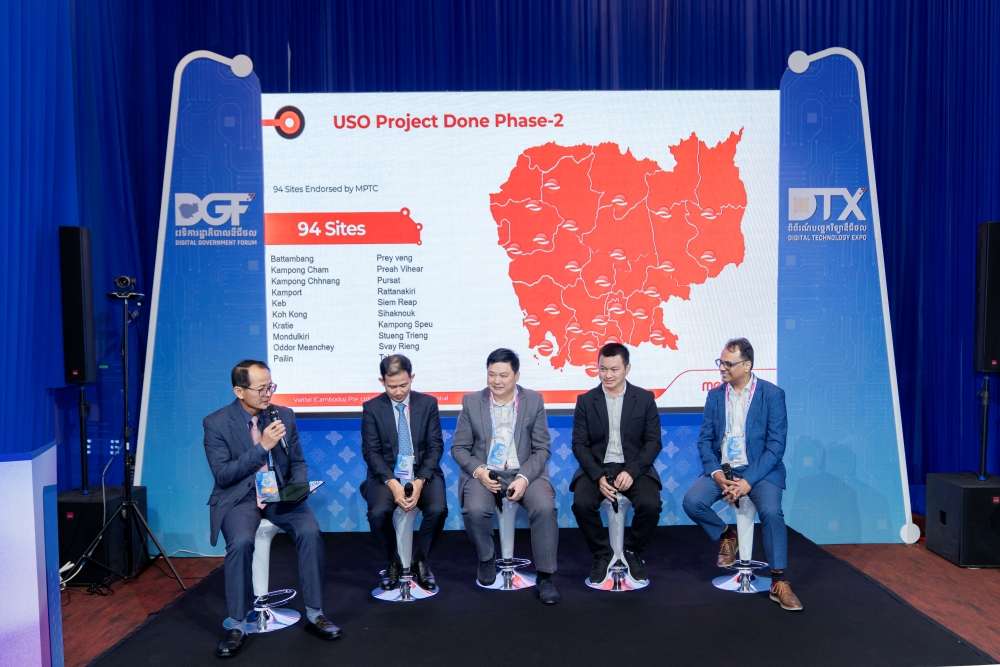
H.E. Mr. Chun Vat emphasized the government’s focus on completing rural connectivity, noting that over 90% of Cambodians now have access to 4G. Mr. Ouk Chipphal explained that his company connects to Hong Kong and Singapore hubs to secure bandwidth and currently has 94 sites endorsed by MPTC. He also noted that the budget implications of transitioning to 5G are still being evaluated.
Mr. Sok Ty shared APNIC’s initiatives in digital development, including Wi-Fi access, funding support for the Prayuters Library Programs of Open Development Cambodia in Preah Vihear province, and digital skills training. They aim to train students in Cambodia on digital skills, supporting the country’s broader digital growth. Mr. Sanjay Pangaonkar focused on international backbone infrastructure, including submarine cables connecting Sihanoukville globally. Future-ready initiatives include expanding 5G and Fiber to the X (FTTX), Fiber to the Home (FTTH) targeting 1 Gbps by 2026, Fixed Wireless Access (FWA) combining 5G radio with fiber backhaul, and increasing Dense Wavelength Division Multiplexing (DWDM) capacity from 400 EGL to 800 EGL. Additionally, MCT Submarine Fiber plans to own a link to Singapore and Hong Kong, targeting terabit-scale international capacity.
Mr. Penh Sokharath further elaborated on tower sharing strategies, emphasizing the importance of selecting the best-fit locations for MNOs. One tower can accommodate up to three operators, offering cost and resource savings while maintaining good aesthetics. Site plotting considers power capacity and population density, ensuring optimal coverage and efficiency.
Cambodia’s roadmap toward universal connectivity illustrates a careful balance of infrastructure expansion, cost efficiency, and digital inclusivity. From expanding fiber networks and 5G towers to implementing tower sharing policies and promoting digital skills, the country is positioning itself for a connected and digitally empowered future. With mobile services already very affordable for its citizens, Cambodia is setting a strong example for sustainable and inclusive connectivity in the region.