Strengthening community fisheries through data: A consultation in Preah Sihanouk Province
On the morning of 04 March 2026, in the coastal district of Prey Nop, Preah Sihanouk province, a diverse group of stakeholders gathered with a shared purpose: to ensure that the stories, realities, and challenges of Cambodia’s coastal fishing communities are accurately reflected in data and that this data can be used to support better decisions for their future.
Organized by the Open Development Cambodia (ODC) team, the consultation workshop brought together representatives from government, civil society, and community fisheries in Preah Sihanouk and Koh Kong provinces. While the agenda focused on datasets and infographics, the heart of the workshop lay in something deeper by connecting data with lived experience. A total of 25 participants (including 6 women) attended the workshop, representing the Koh Kong Provincial Fisheries Administration Cantonment, partner organizations, community fisheries, and local authorities.
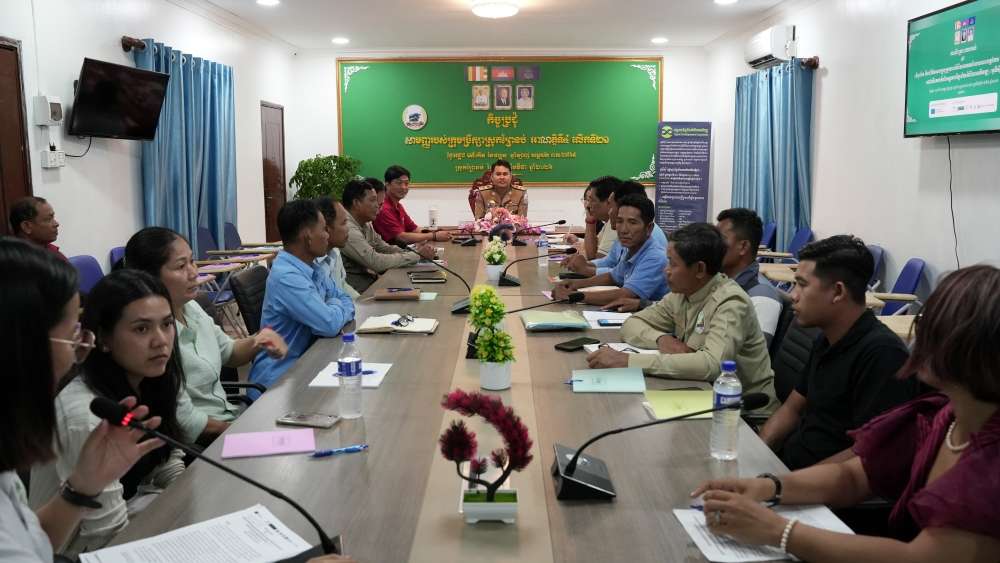
As participants reviewed maps and data visualizations displayed during the session, many recognized their own communities reflected on the screen. Locations, registration statuses, and management plans—these were not just data points, but representations of years of collective effort, local knowledge, and daily livelihoods tied to the sea.
The workshop was designed with four key objectives:
- To present and disseminate data and infographics on community fisheries through the ODC platform
- To collect stakeholder feedback to improve the quality, accuracy, and completeness of the data
- To strengthen participants’ capacity to access and use the ODC website, including legal and fisheries information
- To promote the use of open data for evidence-based decision-making and inclusive natural resource management
Implemented under the “Strengthening CSOs to Take Action on Economic Governance (SCAEG)” project, co-funded by the European Union, the consultation reflects a broader commitment to transparency, accountability, and participation.
In her welcoming remarks, an ODC representative highlighted the organization’s role in collecting and publishing community fisheries data through its “Fisheries Resource Management Information” profile page. She also introduced a series of community fisheries posters developed by ODC, simple yet powerful tools that present key information about each community alongside visuals that bring their identity to life.
Beyond data collection, she emphasized ODC’s ongoing efforts to build community-level capacity through training in social media, community mapping, and data visualization. These initiatives aim to ensure that communities are not only represented in data but are also equipped to use it.
Following this, a representative from ActionAid reflected on the journey of collaboration under the SCAEG project. She acknowledged that while the project is approaching its conclusion, the relationships, trust, and shared achievements built over time must continue.
“The progress we see today is not the work of one organization,” she noted. “It is the result of strong cooperation between communities, civil society, and government institutions.”
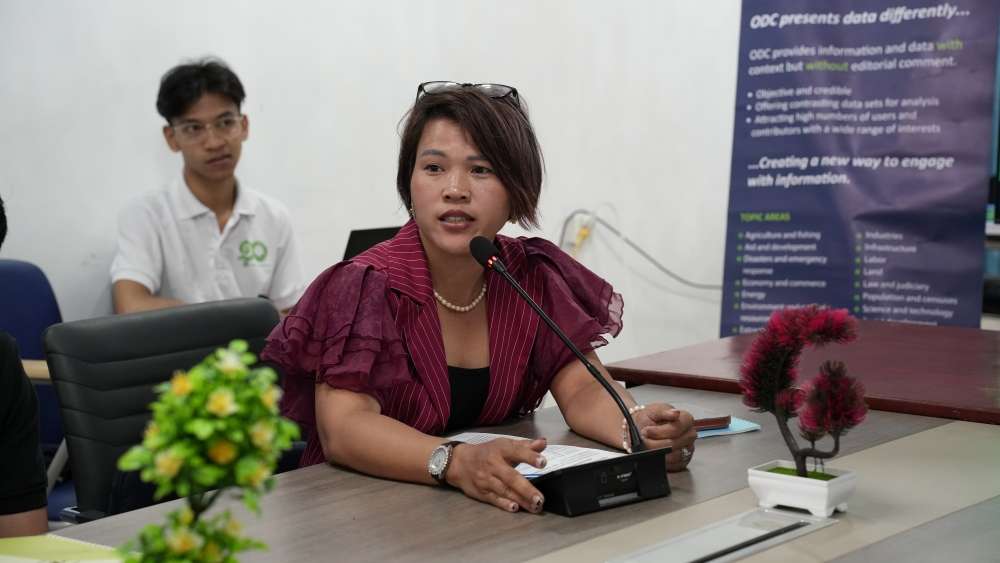
Local authorities reinforced the importance of making data accessible and actionable.
Mr. Ith Seangsovimol, Koh Kong Provincial Fisheries Administration Cantonment, emphasized that uploading data to an online platform ensures that valuable information is not lost and remains accessible to all stakeholders. He noted that such accessibility is essential for informed planning and long-term impact.
Mr. Din Bunnoeun, Deputy Governor of Prey Nob District, presided over the consultation meeting and emphasized the importance of participation in the project. He stressed that both community fisheries and local authorities must actively engage, not only to understand the project, but to contribute meaningfully to its activities and outcomes.
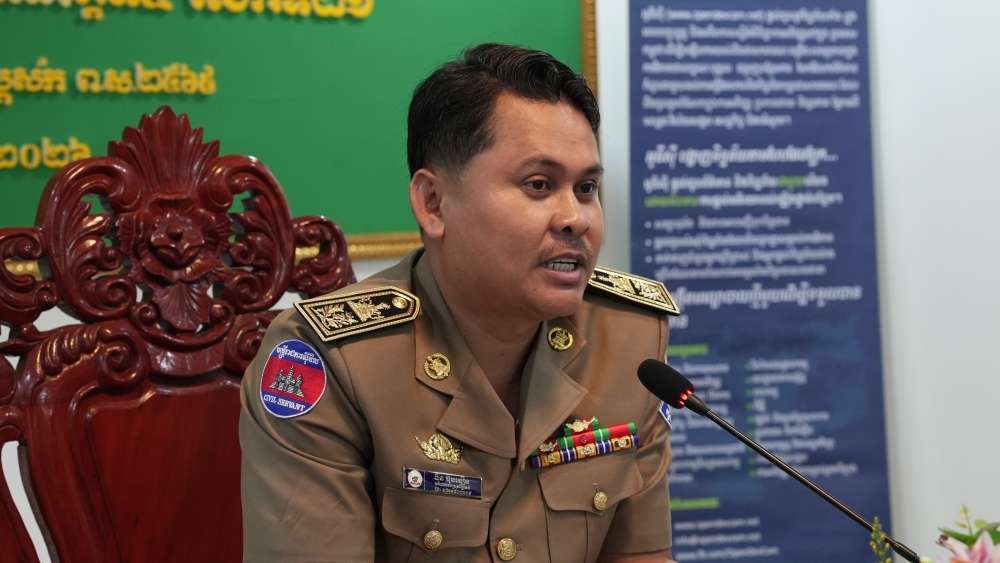
These perspectives underscored a common theme throughout the workshop: data is most powerful when it is shared, understood, and used collectively.
The technical sessions led by ODC staff focused on presenting datasets and infographics related to community fisheries in Preah Sihanouk and Koh Kong provinces. Key information included:
- Geographic distribution of community fisheries
- Registration status and legal recognition
- Availability of management plans
However, the session quickly evolved into an interactive dialogue. Participants asked questions, clarified discrepancies, and contributed updates based on their firsthand knowledge.
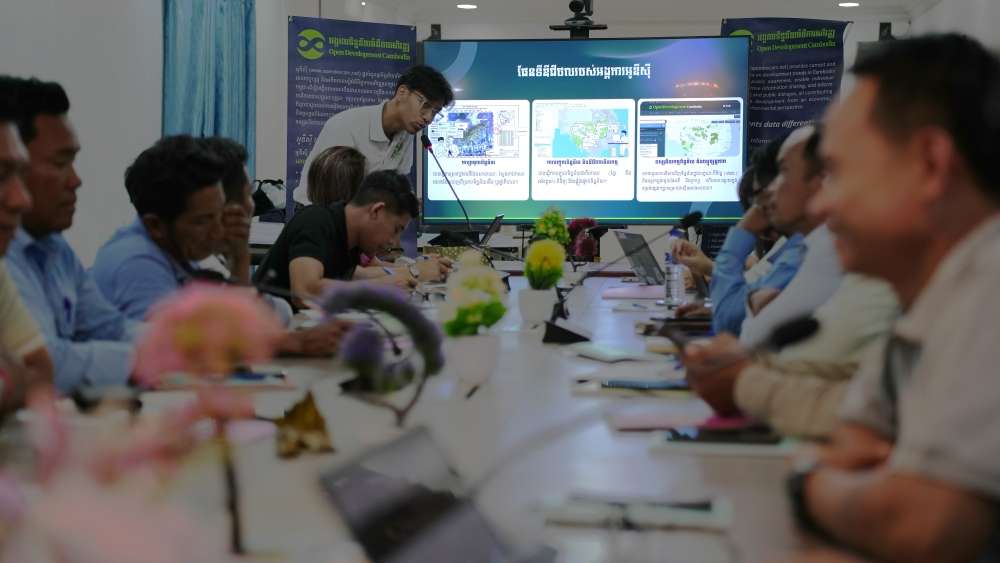
This participatory approach transformed the workshop from a one-way presentation into a collaborative validation process, ensuring that the data not only informs stakeholders but is also shaped by them. Recognizing that access to data is only meaningful if stakeholders know how to use it, ODC facilitated a hands-on session demonstrating how to navigate its website. Participants learned how to search for laws, regulations, and fisheries-related information, gaining practical skills they can apply in their daily work. For many, this was an important step toward greater independence in accessing information and making evidence-based decisions.
As the workshop concluded, it was clear that its value extended beyond the immediate outputs of data validation and capacity building. The consultation provided a rare opportunity for government agencies, civil society organizations, and community representatives to sit together, exchange perspectives, and build a shared understanding of the challenges and opportunities facing coastal fisheries.
ODC will continue refining its datasets based on the feedback collected during the consultation, ensuring that the information remains accurate, relevant, and accessible. At the same time, stakeholders are encouraged to remain actively engaged, updating data, using it in their work, and advocating for its use in decision-making processes.

