Strengthening CSOs’ data literacy skills for evidence-based decision-making
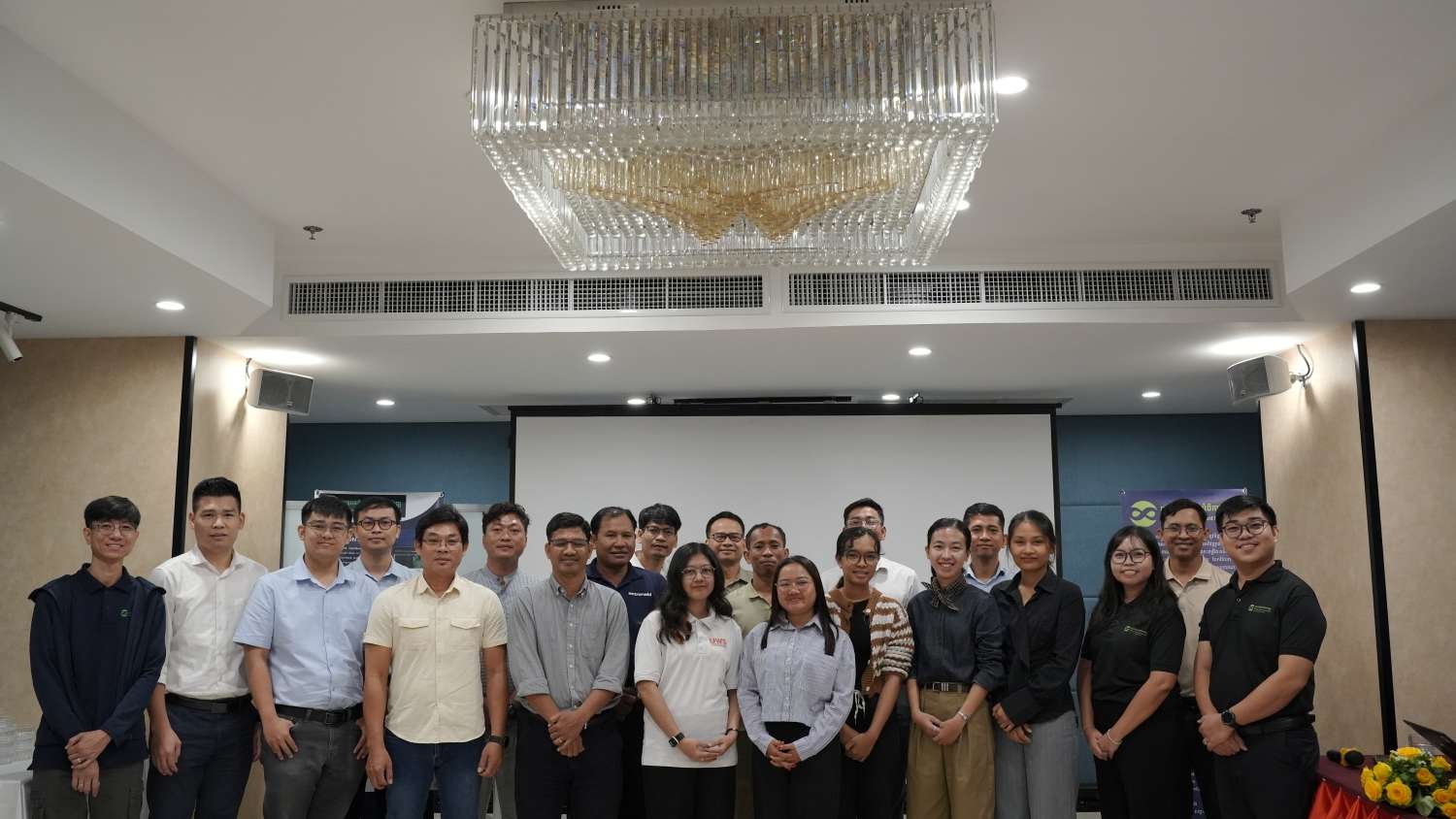
Open Development Cambodia (ODC) successfully organized a two-day Data Literacy Training Workshop for Civil Society Organizations (CSOs) in Phnom Penh on October 22–23, 2026. The workshop brought together 18 participants, including five women, from partner organizations working to improve livelihoods in Cambodia’s coastal communities. It also provided a space for CSOs from different sectors to exchange experiences and strengthen their ability to use data in their day-to-day work.
Data plays an important role in how organizations plan activities, monitor progress, and make decisions. However, collecting information is only one part of the process. Organizations also need the skills to manage, analyze, and interpret that information so it can be used to address real challenges and respond to community needs.
The training aimed to equip participants with practical skills to work with data throughout the project cycle. The sessions covered several key areas, including:
- Data cleaning: Identifying and correcting errors, missing information, and inconsistencies to improve data quality.
- Data organization: Arranging datasets in a clear and structured way to make information easier to manage and analyze.
- Data analysis: Examining information to identify patterns, trends, and findings relevant to project activities.
- Data interpretation: Making sense of the results and understanding how they can inform decisions and actions.
- Data visualization: Presenting findings through charts, graphs, and other visual formats that make information easier to understand and communicate.
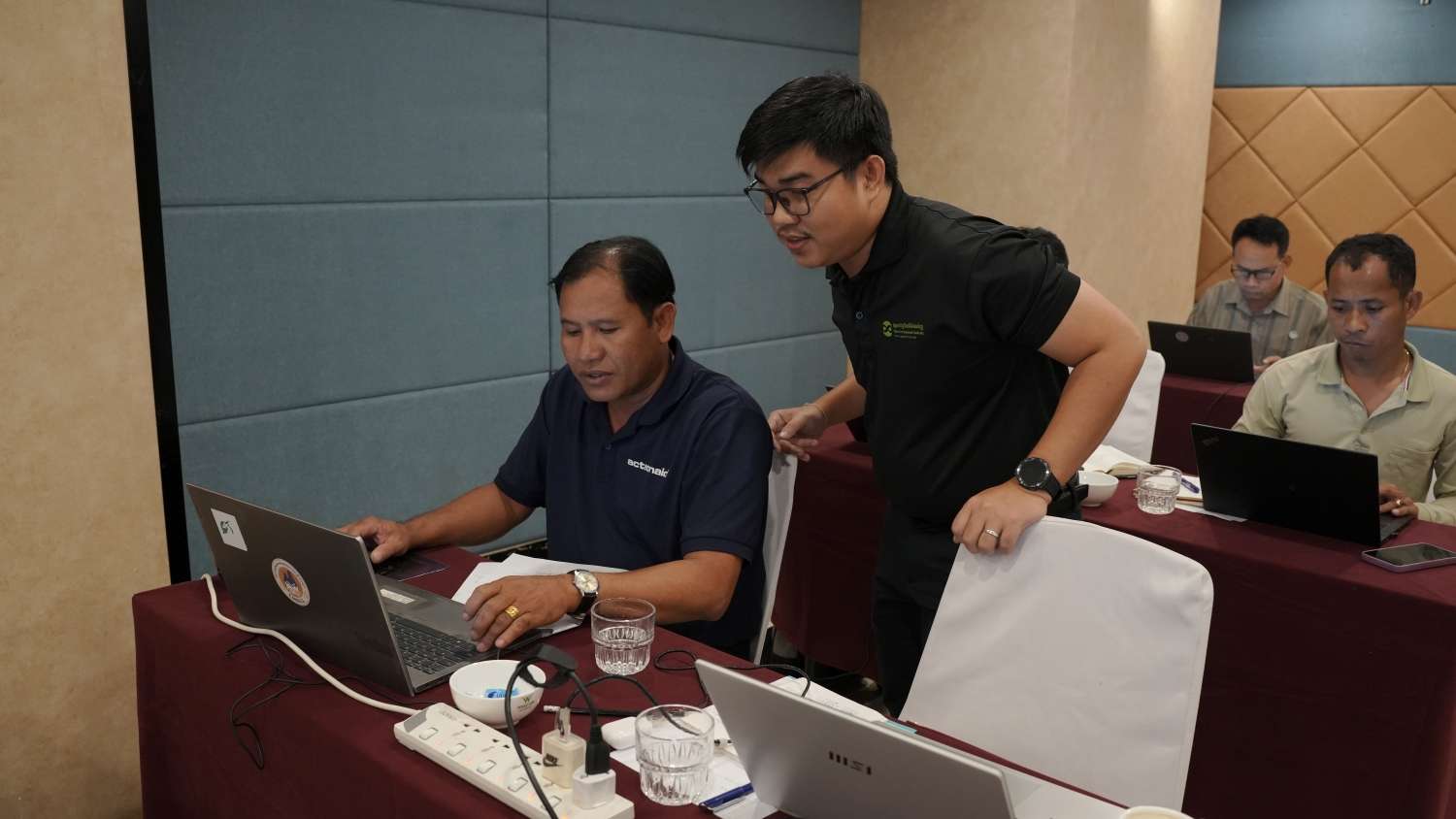
Through practical exercises and interactive learning activities, participants explored how to apply these skills. The hands-on approach enabled them to practice working with data, strengthen their understanding of key concepts, and learn how to draw meaningful conclusions from data to support their work.
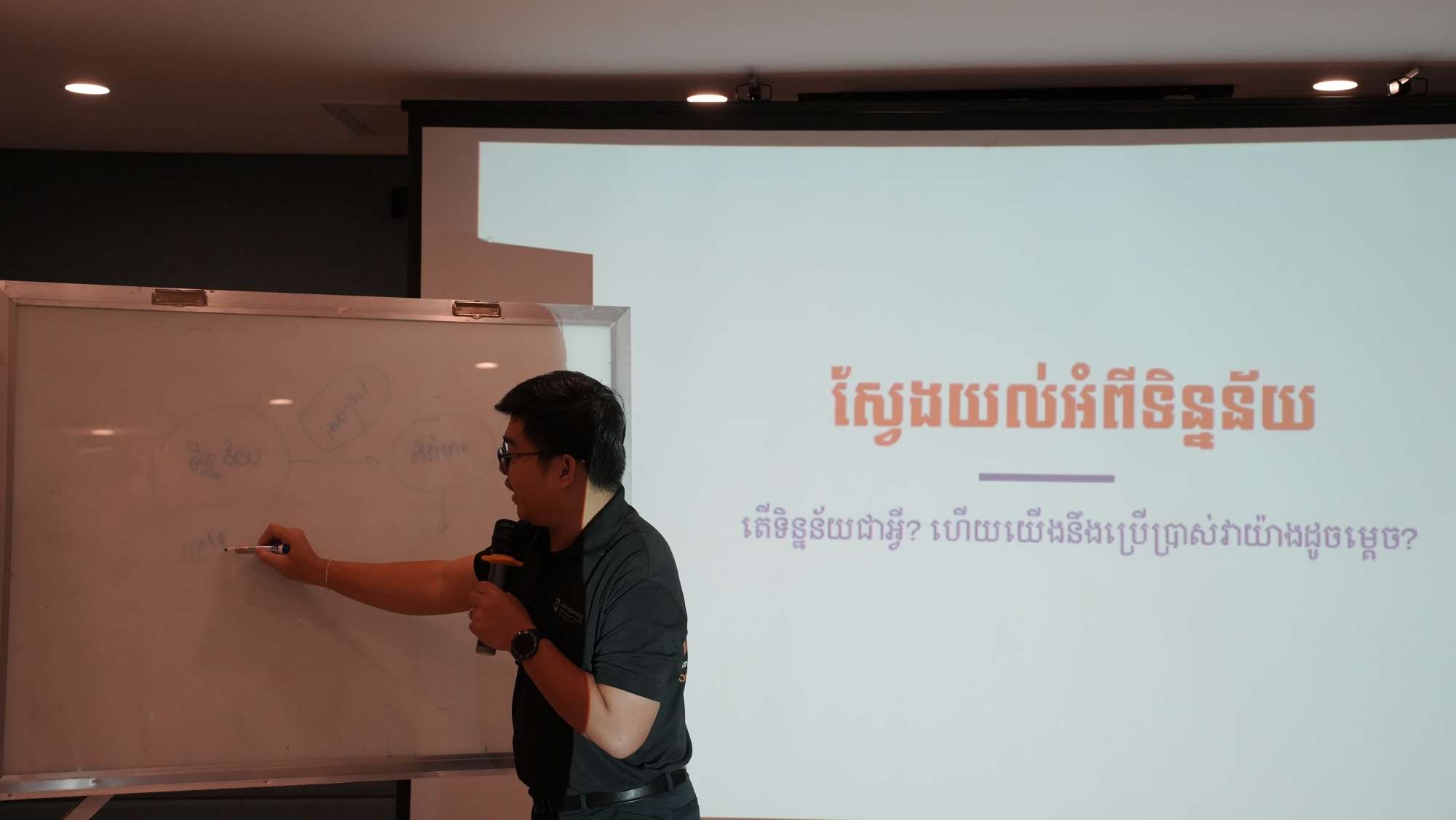
The workshop highlighted the necessity of integrating data literacy into all sectors and organizational spheres. For CSOs working on improving livelihoods in Cambodia’s coastal communities, the ability to analyze and interpret data can help to identify community needs, track project progress, evaluate outcomes, and develop interventions that are more responsive to local priorities.
Improved data literacy skills can also help organizations to better communicate project results, engage more effectively with interested parties, and enhance transparency and accountability in development efforts. CSOs need to make better use of the evidence available to them to improve the quality of their decisions and ensure their activities are based on reliable information and the needs of the community.
Importantly, the training was not only theoretical but also included hands-on activities, which allowed participants to put into practice their learning. The hands-on exercises were helpful in reinforcing key concepts and in showing how data management, analysis, and visualization can be applied in real-world project settings.
The completion of this training represents a further step in ODC’s efforts to strengthen the capacity of civil society organizations to use data and evidence in their work. As participating organizations put these skills into practice, they will be better positioned to generate useful insights, communicate project results, and make decisions that contribute to more effective community development.
The workshop was organized under the Strengthening CSOs to Take Action on Economic Governance (SCAEG) project, co-funded by the European Union. Through this project, ODC continues to work with civil society organizations to strengthen their capacity to use information and evidence to promote effective governance and sustainable development in Cambodia.

