Learning to stay safe online: A journey with young students in Preah Vihear
On 25 August 2026, Open Development Cambodia (ODC) brought the same workshop that we had previously organized with students in Kampong Thom province to students in Preah Vihear province. We co-hosted this workshop under the topic of “Knowledge sharing: Promoting online safety for children” together with the Ministry of Post and Telecommunications (MPTC) and the Cooperation Committee for Cambodia (CCC) at the Preah Puth Meanchey pagoda.
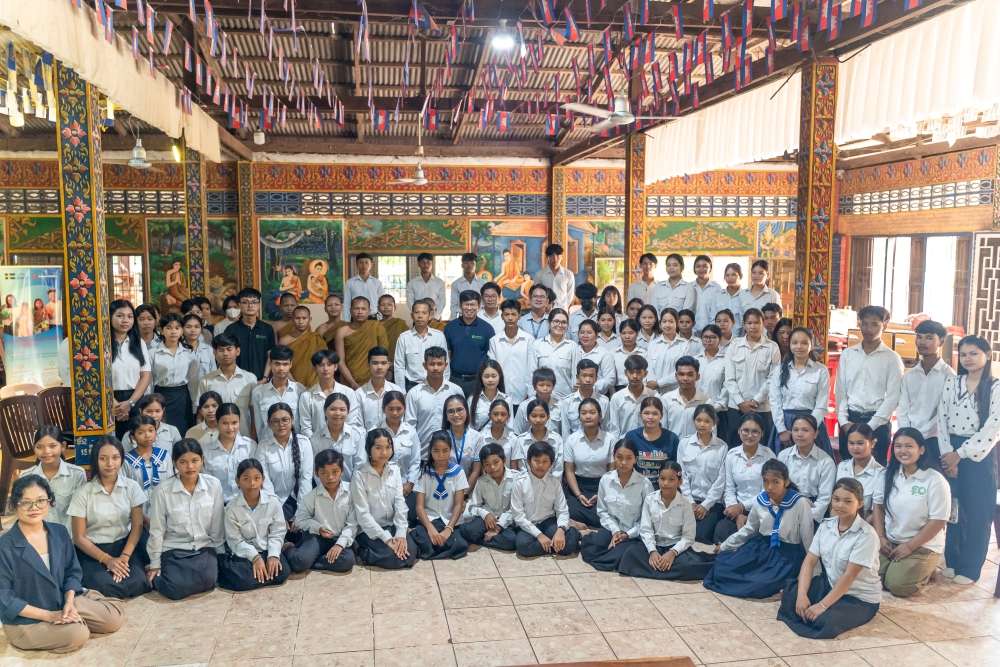
A total of 102 students (58 women and 44 men) aged under 18 from primary and secondary schools engaged in this joint effort to promote online safety for children in Cambodia. Unlike the workshop in Kampong Thom province, we employed a slightly different approach to build their understanding of online safety because the participants were younger. We created an engaging, supportive, and playful learning environment throughout the full-day workshop, allowing students to learn while interacting with their peers and the facilitators.
Exploring the benefits and risks of digital media through a friendly discussion
The workshop began with a panel discussion exploring the opportunities and risks associated with digital media. This was a friendly discussion, moderated by Mr. Vong Promnea and brought together Mr. Chan Pheakdey, a member of the Online Safety Working Group at the Ministry of Post and Telecommunications, Ms. Sours Thida, Communications Officer at ODC, and Ms. Chorn Thavy, SDGs Ambassador for the Volunteer Youth Ambassador Program.
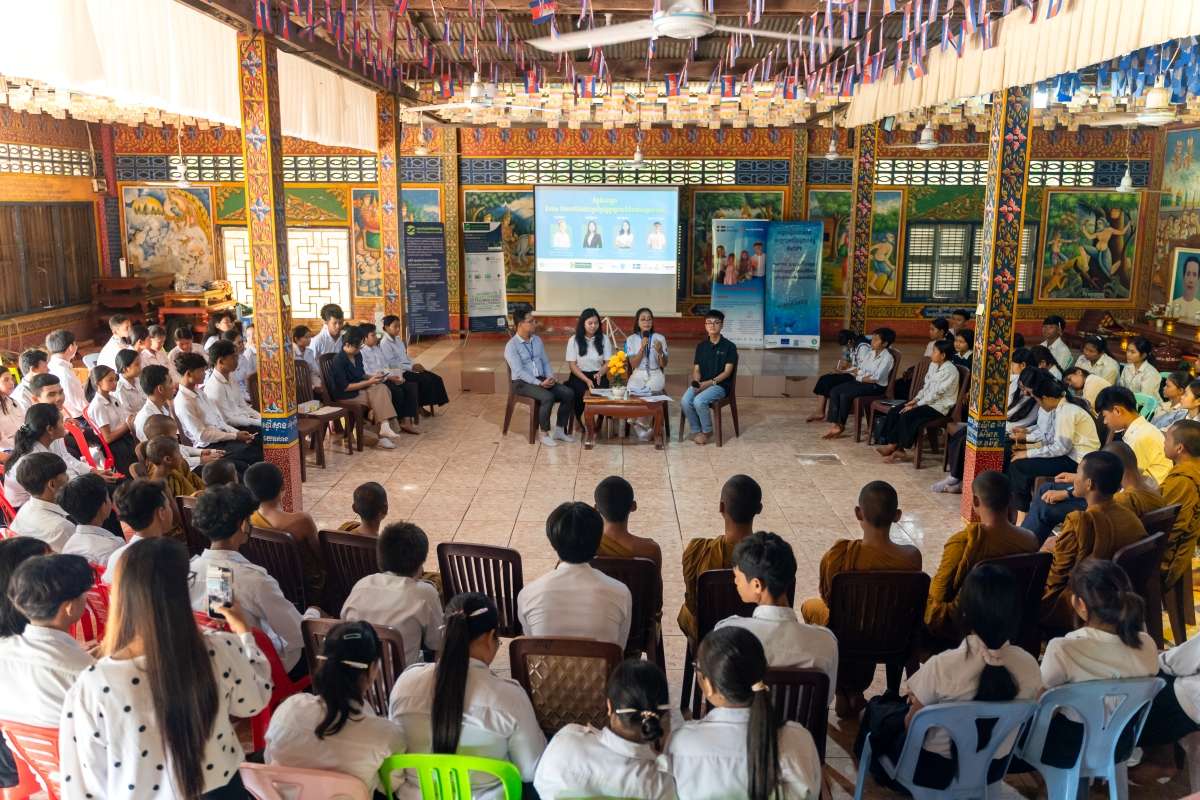
The discussion covered how communication and access to information have changed as people are shifting from traditional media to digital media in Cambodia, as well as the benefits this change can bring to young students. These include accessing learning materials, connecting with peers, and contributing to community development. Alongside these benefits, potential risks were also raised by the panelists, not to scare them but to raise awareness, based on the Disruptive Harm Report 2022.
Empowerment of young students to effectively and safely use digital media platforms was also emphasized in the panel. In particular, the panelists highlighted the role of digital literacy in building capacity for students to safeguard personal information, detect online harms, seek appropriate support, and use the platforms responsibly. Different stakeholders also have responsibilities in this issue, as mentioned by the panelists, including parents, teachers, friends, tech companies, civil society organizations, and government.
Digital footprints: A source of online risks against children?
The facilitator compared digital footprints to footprints left in mud by people walking through it. This metaphor helped students understand that activities shared online can leave lasting traces, even when people later try to delete them. These footprints can result from almost every activity that we engage in online, such as what we and others post, the places we go, and what we communicate. Such activity may contain personal data of the users, which can potentially be misused to harass and exploit children.
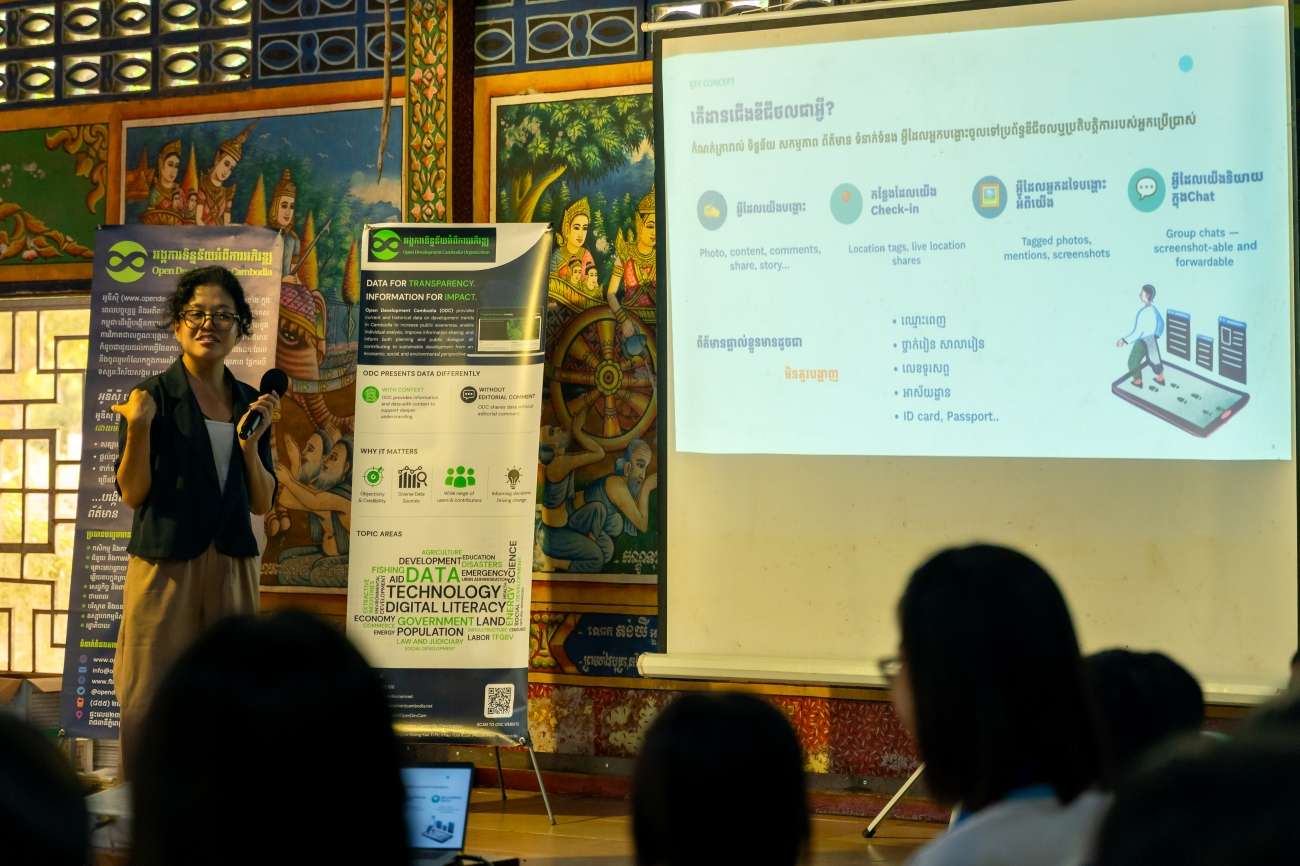
The facilitator warned students of the connection between disclosure of personal data and online harassment. This occurs when sensitive information, consisting of full name, school, phone number, home address, and ID card, is shared publicly or with people known only online. One concerning issue is the limited awareness among young people about the possible consequences of disclosing personal information. The facilitator referred to findings from the Disruptive Harm Report 2022, which found that only 29% of Cambodian youth surveyed considered sending this type of information to someone they only knew online to be “very risky.”
Before transitioning to the next session, recognizing the impacts of digital footprints, the facilitators shared several practical approaches to reduce digital footprints and protect themselves online. These included understanding the consequences of making personal information available in public, closing or deleting old accounts, and adjusting account privacy settings.
Online harassment Cambodian children may face every day
After introducing the potential risks of digital media and how these risks emerged, the facilitator drew the attention of students to the common forms of online harassment that young people may encounter. These include cyberbullying, non-consensual sharing of images, online sexual harassment, cyberstalking, and online grooming, all of which are particularly relevant to young people.
The distinction between a “joke” and “harassment” was made during the session, given that it is not always well understood by some people, including young people themselves. The gap inevitably has great consequences for the persistence of online harassment since they may perceive that the act of harassment is just a joke.
The facilitator explained each form of harassment with examples to help students recognize such behavior in the future. Following the explanation, the students were asked to work in groups to assess whether the situation in the scenario could be considered a form of online harassment. This was a practical exercise for students to apply what they had learned.
Online safety starts with individual users
The final section of this workshop focused on the ethics of using social media as well as reporting mechanisms that individual users can adopt to create a safer online environment for everyone. At the same time, the discussion emphasized that technology companies and other stakeholders also have important responsibilities in addressing online concerns for children.
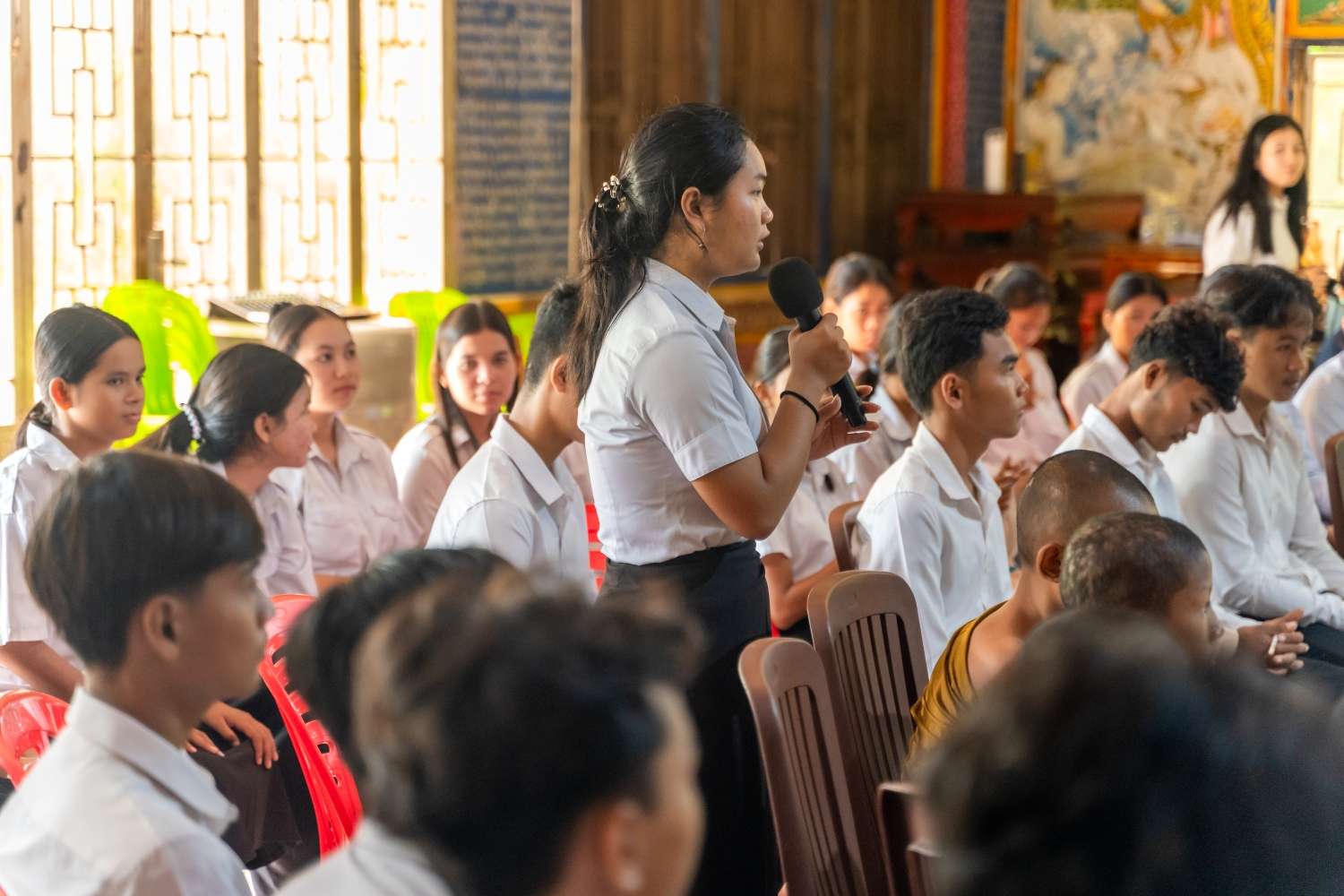
Young people were encouraged to reflect on their own online behavior and how their actions could potentially contribute to online harm. For instance, commenting on other people’s posts can sometimes involve harmful behavior, including hate speech or the non-consensual sharing of personal information. Therefore, the facilitator introduced several principles of responsible online users, ranging from protecting other people’s privacy, sharing verified information, and facing accountability for one’s actions.
The workshop ended with a reporting mechanism, where the facilitator invited participants to practice reporting harmful or abusive content on platforms, particularly Facebook and TikTok, after learning the basics. Beyond this mechanism, the facilitator also introduced several helplines available in Cambodia that young people and their parents can contact for support.

