Technical mapping meet-up: Enhancing conservation efforts through geospatial technology
Open Development Cambodia (ODC) hosted a half-day Technical Mapping Meet-up on December 9, 2025. The event brought together technical experts, conservation practitioners, and local stakeholders to exchange insights on how geospatial technologies can strengthen forest monitoring and conservation efforts across Cambodia.
With 17 participants, including researchers, students, CSOs, and private-sector representatives. The meet-up served as a collaborative space to discuss practical applications of mapping tools and build stronger technical networks.
The event is aimed at:
- Exchange knowledge and practical experiences on forest mapping tools
- Strengthen technical networks among local stakeholders
- Promote collaborative efforts in forest monitoring and conservation
Presentation 1: Forest Monitoring in the Central Cardamom Mountain Landscape
Ms. Kong Borey, GIS Coordinator for Conservation International (CI), presented CI’s hands-on approach to tracking forest cover changes in one of Cambodia’s most biodiverse areas. The organization follows a five-step workflow designed to ensure reliable detection and verification of deforestation:
- Using satellite imagery
- Analyse and digitize where deforestation
- Share deforestation information with the ranger for patrolling
- Ground trough verification
- Report
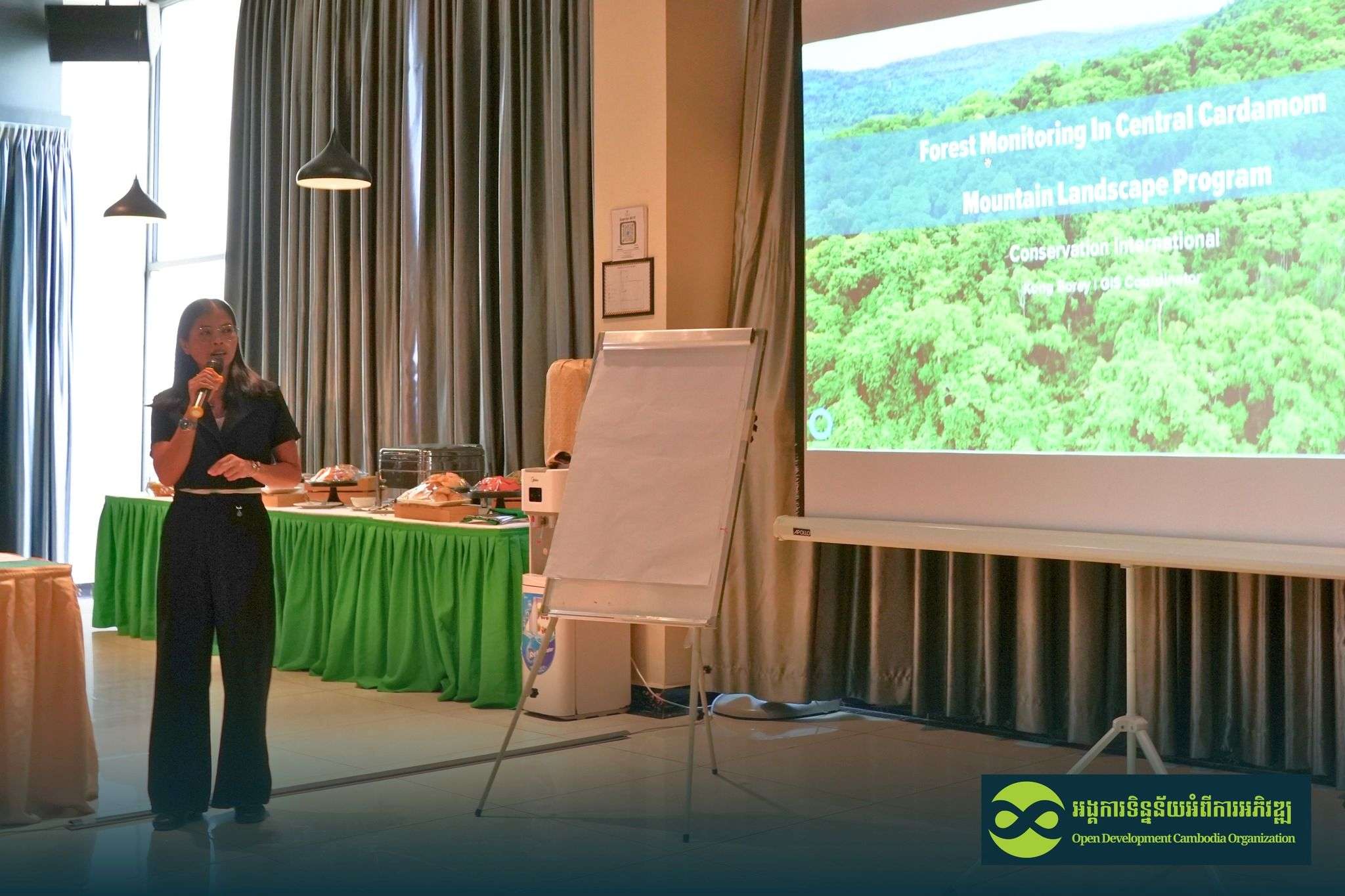
CI primarily uses Sentinel-2 imagery and previously PlanetScope data. When Sentinel-2 coverage is limited, especially during high cloud cover, CI may cross-check with Global Forest Watch (GFW) alerts, though with caution due to common false positives.
The presentation highlighted the effectiveness of manual digitization, which often produces cleaner and more accurate results compared to automated classification systems. This is especially important during the rainy season when clouds and regrowth vegetation can mislead automated algorithms.
Presentation 2: Leveraging SMART and EarthRanger for Effective Conservation Work
Mr. Sok Lyan, a specialist in conservation technology, GIS mapping, and wetland management with the Wildlife Conservation Society (WCS), shared WCS’s experience in leveraging digital tools to safeguard the ecologically important Tonle Sap floodplain, a region facing growing threats from:
- Wildlife trafficking
- Invasive species
- Habitat loss
- Limited community engagement due to low digital literacy
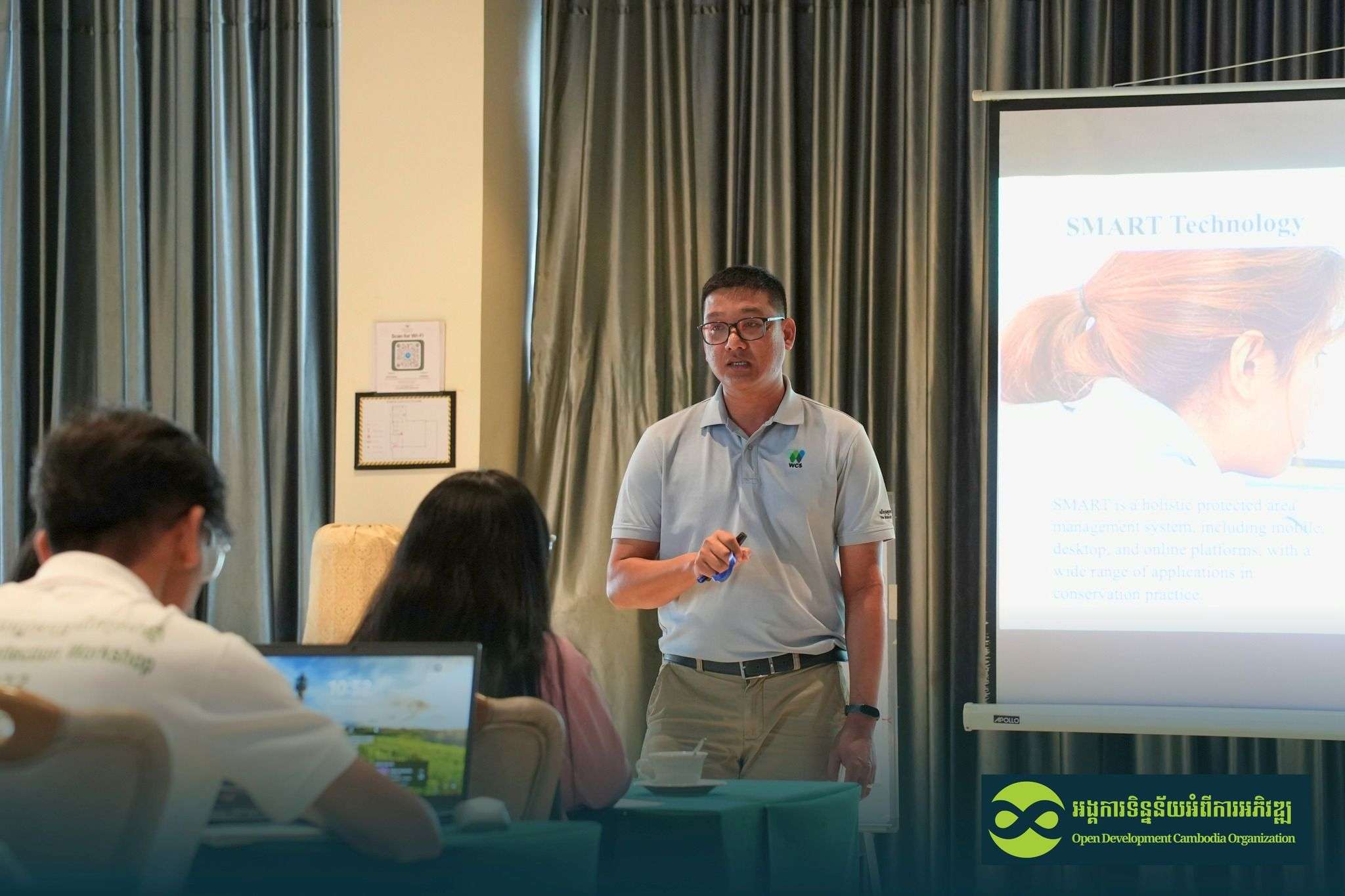
WCS relies on the SMART (Spatial Monitoring and Reporting Tool) system to support rangers and community patrol teams. SMART offers:
- A Khmer-localized interface suitable for users with low literacy
- Voice and icon-based data entry for accessibility
- Tools for generating patrol plans, hotspot maps, and incident reports
- A database containing records from 2015 to the present
Limited internet connectivity remains a challenge for real-time alerting. To address this, WCS has begun piloting Garmin inReach satellite communication in certain landscapes to improve rapid response capabilities.
WCS complements SMART with advanced tools such as:
- EarthRanger, which integrates SMART data with external sources like GFW tree-loss alerts and NASA FIRMS fire data
- Ecoscope, a platform that consolidates multi-source information into intuitive dashboards for assessment and decision-making
These integrations allow WCS to visualize patterns, identify threats, and coordinate more effective conservation strategies.
Strengthening Collaboration for Forest Protection
The presentations highlighted the increasing significance of geospatial technologies in combating deforestation and biodiversity loss in Cambodia. From satellite imagery analysis to mobile data collection and integrated alert systems, technology is providing conservation teams with the tools needed to make faster, more informed decisions.
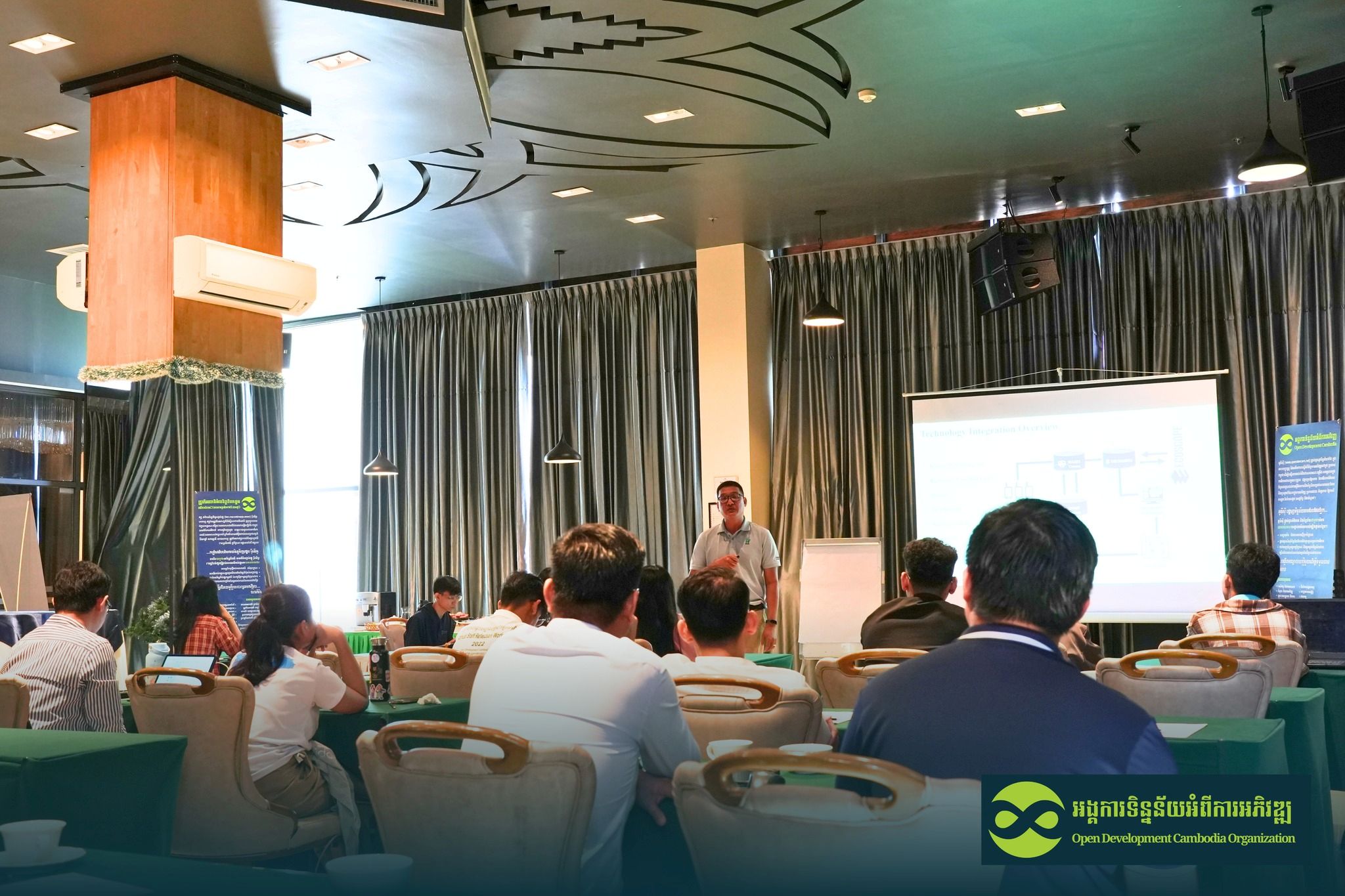
The Technical Mapping Meet-Up highlighted the value of bringing practitioners together to share real-world experiences, troubleshoot challenges, and identify opportunities for collaboration.

