Ideathon: Bridging innovation and AI experts
We saw the competition announcement of the AI for Gender Inclusion Ideathon by Open Development Cambodia (ODC) and GIZ Cambodia just two days before the deadline. I was not sure if we could apply for it on time, but then we decided to just try, as we have nothing to lose. So, we rushed through the application and made the submission. To our surprise, we got shortlisted. At that time, we were extremely busy with school. Classes, assignments, exams, everything was happening at once. But even with all that pressure, we decided to push through because we believed that Refair was bigger than just a project and was something meaningful to us.
On the first day of the event, we met Dixon, our mentor. He offered us diverse perspectives regarding our project and how to refine it. Lucky for us, he had extensive experience in AI governance and even gave talks about AI in government and AI for gender inclusivity during that conference as well. He was literally the perfect mentor for Refair because our project lies exactly at the intersection of AI, policy, and fairness.
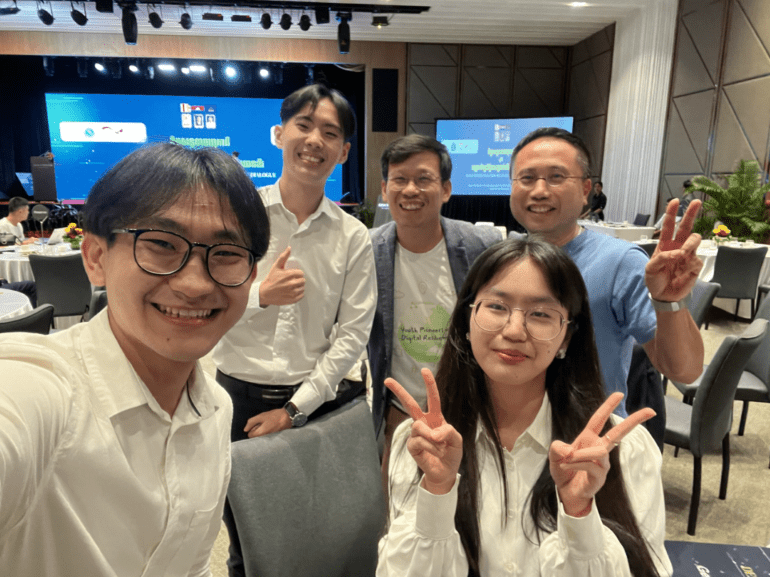
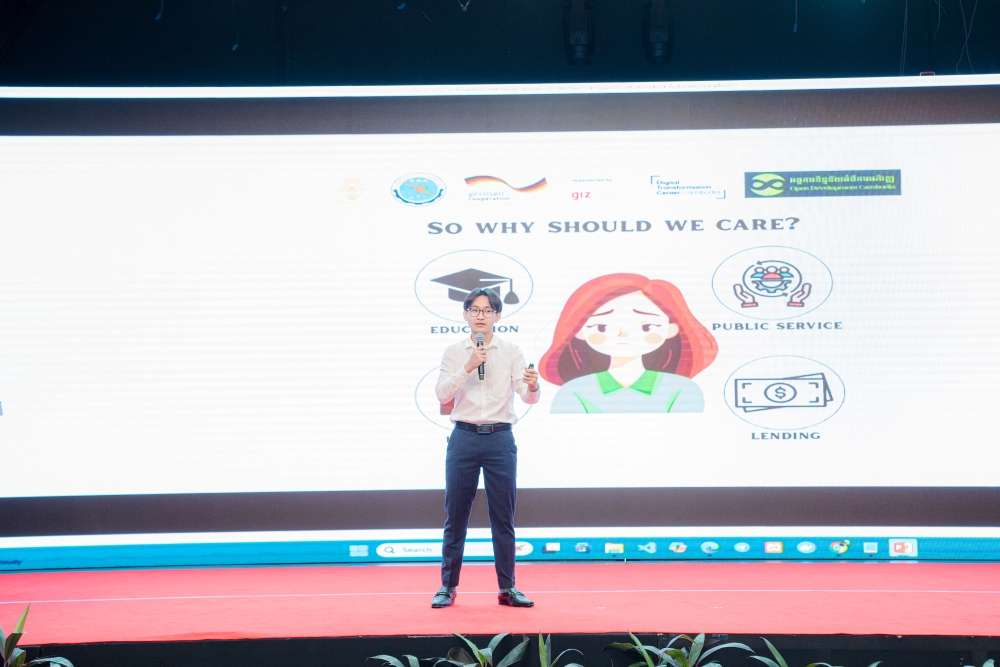
To prepare for the presentation, my teammates and I spent many sleepless nights in meetings, improving our ideas and refining our framework. There was a time when we wanted to give up, but we did not and kept reminding ourselves that we were doing something that could make an impact on society. When the presentation day came, we were very nervous. I still remember that we went early to the venue to rehearse and memorize our script. I was so tense that I went outside to the riverside, quietly repeating my lines. When our turn came, we were not fully ready. Suddenly, our nervousness grew even stronger, but we walked onto the stage with confidence. After we finished, we expected many questions because the judges had asked a lot to the previous teams. In the end, we received only one question. We were surprised, and quite frankly, worried. When judges do not ask many questions, there are only two possibilities: either you presented so clearly that there is nothing to ask, or you did not do well enough to spark interest. Still, we kept our heads high. We had done our best. At that point, all we could do was hope for the best. I remember that Laimeng and I were still having an online class during that time, and Muyleang was stressing over the AI assignment at school. When the announcement came, we could not even look at each other. The three of us simply zoned out and prayed. Then we heard: “Refair.” For a few seconds, I was silent. Then I jumped and said, “We did it. We are going to Singapore.”
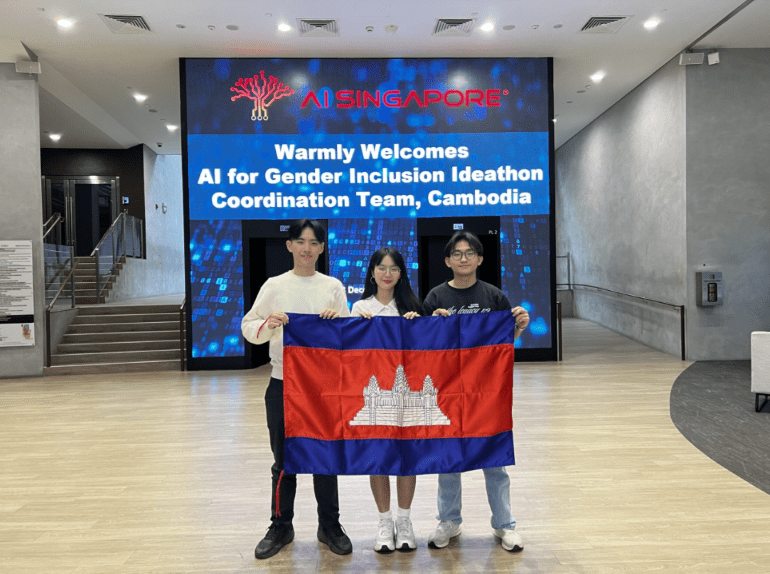
Before the study trip to Singapore, I expected to learn more about how Singapore integrates AI, policy, and innovation. I wanted to see how real companies and organizations balance technology with governance and inclusivity. I also hoped to test whether Refair could stand in conversations beyond Cambodia in a more developed and structured tech environment. During the study visits in Singapore, we had the opportunity to learn and pitch Refair to well-established companies and organizations. Every organization focuses on distinct areas, which provided us with different perspectives and feedback on our project. I especially gained a lot of knowledge on how ICANN uses multi-stakeholders in policymaking, the importance of creativity in storytelling from Kontinentalist, and how law intervenes with AI to ensure responsible use of the advancement of AI from KAS and AI Singapore.
Later, we were invited to present Refair to Fujitsu employees. We had the opportunity to share our AI fairness metrics, how policy contexts differ across countries, and how Refair can help organizations mitigate bias risks before deployment. After returning, we did not stop there. We further refined Refair, especially on the policy framework, and started incorporating more measurable metrics to align with international AI ethics standards while also improving our weighting system to better support machine learning evaluation.
All in all, Refair is still growing, and our next step is to make it more scalable and practical for organizations. We want to bring this idea to life to further contribute to AI ethics and the inclusivity of AI. This journey was not easy; to be honest, it was brutal. It involved stress, doubt, exhaustion, and uncertainty. Fortunately, in the end, it all works out, and we are happy with what we are building. It was also the first time I found meaning in what I did and why I got into tech in the first place.
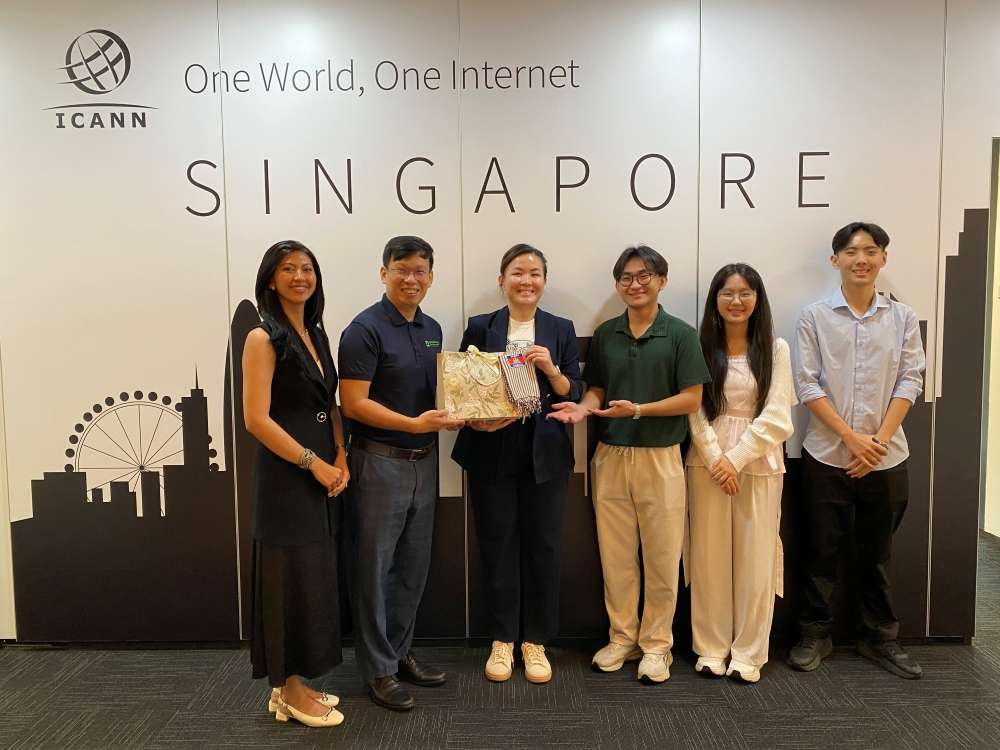
Lastly, I want to thank Open Development Cambodia (ODC), GIZ Cambodia, and all involved partners for organizing the AI for Gender Inclusion Ideathon and giving us the opportunity to join the study trip to Singapore. This experience has forged new perspectives for me and provided new insights regarding Artificial Intelligence and policymaking to better advance ReFair.
 My name is Chan Panha. I am a junior majoring in Information and Communication Technology at American University of Phnom Penh (AUPP) and Data Science and Analytics at TUX Global Institute. I am a very curious person who likes to join tech events, seminars, and competitions.

